

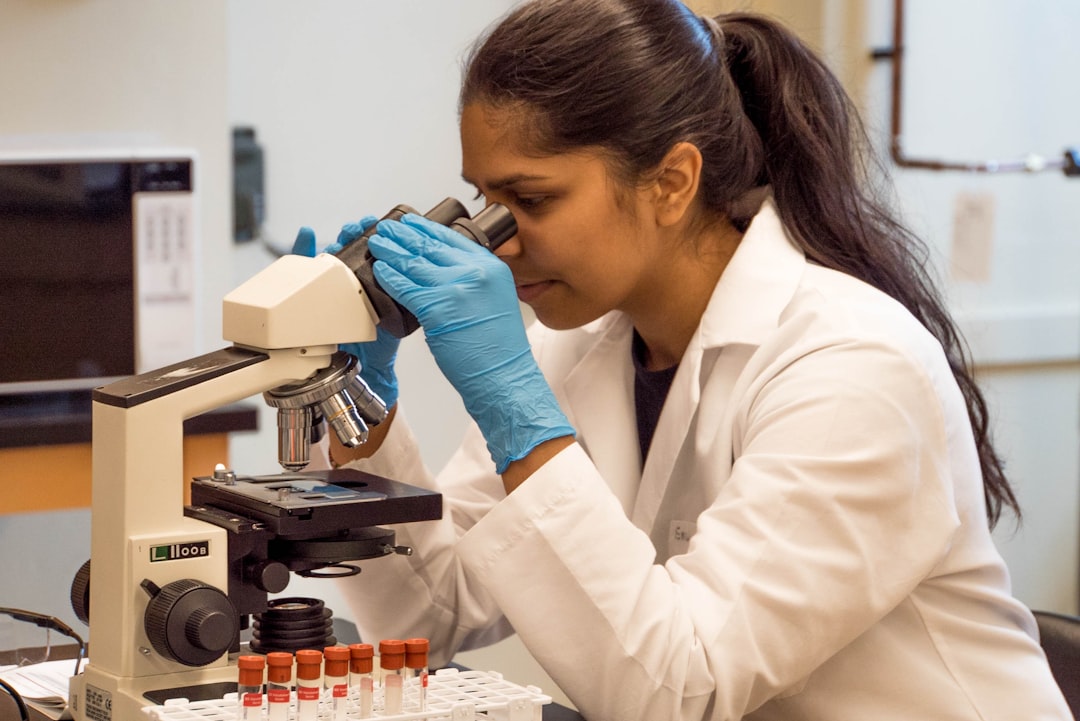
Space research in the United States has long carried a quiet Indian signature, and today that signature is written in bold across laboratories, mission control rooms, and the next generation of deep-space plans.
From classrooms in India to NASA laboratories
The story begins in the lecture halls of the Indian Institutes of Technology. The connection between Indian scientists and NASA goes back to the 1960s, and graduates from institutions such as the IITs joined NASA centers under research and technical exchange programs. That early movement created a channel that has never closed.

Today, the names and roles speak clearly. Dr. Amit Kshatriya serves as Deputy Associate Administrator for NASA’s Moon-to-Mars Program, overseeing Artemis mission integration. Dr. Swati Mohan led guidance and controls operations for the Mars 2020 Perseverance Rover landing in 2021. These are not supporting roles. These are the people at the center of decisions that shape planetary exploration.
The participation of Indian professionals in NASA programs was made possible through academic collaborations and professional mobility frameworks. These mechanisms allowed scientists and researchers to join American institutions while contributing to global science. Over time, many became permanent residents or citizens, forming a vibrant Indian-American scientific community that continues to shape NASA programs today.
The scientists doing the work right now
Look closely at the research happening inside NASA, and you find Indian-origin scientists at every level. Sharmila Bhattacharya works as chief scientist for astrobionics and head of the Biomodel Performance and Behavior Laboratory at NASA Ames Research Center. She is the subject matter expert for the United States Senate Committee on Commerce, Science and Transportation. She studies immune changes during spaceflight and the effects of radiation and altered gravity on living systems. This work is not abstract. It is the practical foundation for sending humans further into space for longer periods.
Then there is Dr. Manisha Ganeshan, who grew up in Mumbai. She specializes in satellite data, studies polar climate dynamics and planetary boundary layers, and is a Fellow of the International Arctic Science Committee. She contributes to NASA’s GEOS models, improving climate prediction capabilities. Her path from a childhood experience of the 2005 Maharashtra floods to a NASA atmospheric science role is exactly the kind of story that makes the diaspora connection feel human and real.
Madhulika Guhathakurta is an Indian-American astrophysicist in NASA’s Heliophysics Science Division. She was the lead program scientist for NASA’s Living With a Star initiative and serves as program scientist on the Solar Dynamics Observatory, Van Allen Probes, and STEREO missions. These missions study the Sun and its effects on the solar system, work that protects satellites, astronauts, and life on Earth.

Fresh ideas winning new NASA grants
In 2026, 3 Indian-American researchers were among only 18 scientists worldwide selected for NASA’s most forward-looking funding. These researchers are among the 18 selected by NASA for its 2026 Innovative Advanced Concepts Phase I awards, which support early-stage ideas that could shape future space exploration. The selected researchers are Saptarshi Bandyopadhyay of NASA’s Jet Propulsion Laboratory in California, Anish Damodaran of the University of Central Florida, and A.C. Charania of Zeno Power Systems in Washington. Their projects cover climate science, advanced space observation, and technologies aimed at helping astronauts during future lunar and deep-space missions.
Bandyopadhyay received an award for his project titled DimSun, which explores using controllable dust clouds in space to manage solar radiation reaching Earth. Charania’s proposal aims to develop spacesuit heating technology using radioisotope heat sources, designed to help astronauts survive the Moon’s nearly two-week-long nights and other extremely cold environments in deep space.
NASA selected 18 concepts under this year’s program, awarding a total of 3.2 million dollars. Each project will receive up to 175,000 dollars for a 9-month feasibility study. For context, these are bets on the ideas that could become the next generation of actual missions.






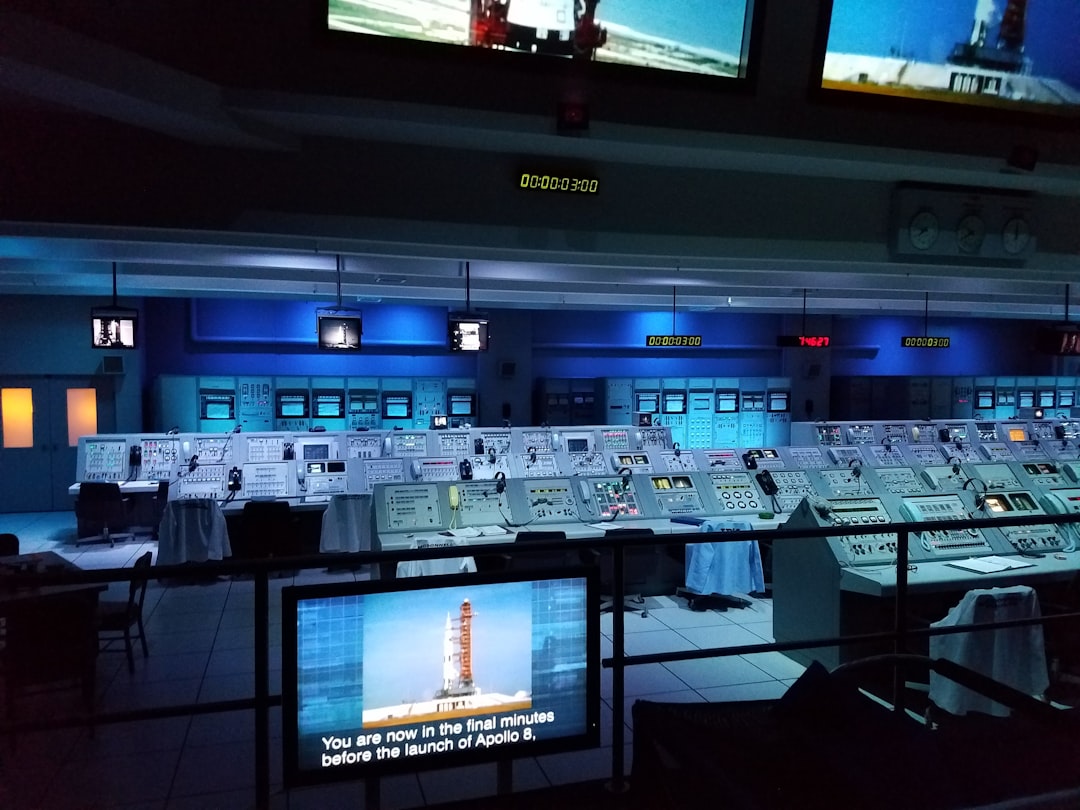
Expert perspective on the India-United States space connection
The relationship between India and the United States in space has moved well beyond individual talent. We are now looking at structured, institutional cooperation that benefits both countries in concrete ways. The 2026 meeting of the India-United States Civil Space Joint Working Group in Bengaluru is a clear signal of this maturity. Indian-origin scientists in the United States act as a natural bridge in this relationship. They carry knowledge of both systems, both cultures, and both scientific traditions. That combination makes them uniquely valuable in a moment when space exploration is becoming more collaborative and more complex than ever before. The next decade will test whether this partnership can move from cooperation on individual missions to a sustained, joint approach to deep-space exploration.
Industry perspective, space policy and international cooperation professionals
The bridge between two space programs
The individual scientists are one part of the picture. The institutional connection between the United States and India is another. In August 2026, the 9th meeting of the India-United States Civil Space Joint Working Group was hosted by India at the headquarters of ISRO in Bengaluru. The meeting advanced civil and commercial space cooperation under the United States-India TRUST Initiative, in line with the February 2025 Joint Leaders’ Statement.
Two ISRO astronauts are set to undergo training at NASA, paving the way for the first joint United States-India mission to the International Space Station aboard the Axiom-4 mission. This is not soft diplomacy. This is operational cooperation with real launch schedules and real crew assignments.
Meanwhile, back in India, the private space sector has grown rapidly, now counting over 1,200 startups, with projections for India’s space economy to reach 44 billion dollars by 2033. The scientists in the United States and the engineers building startups in Bengaluru and Hyderabad are part of the same larger story.
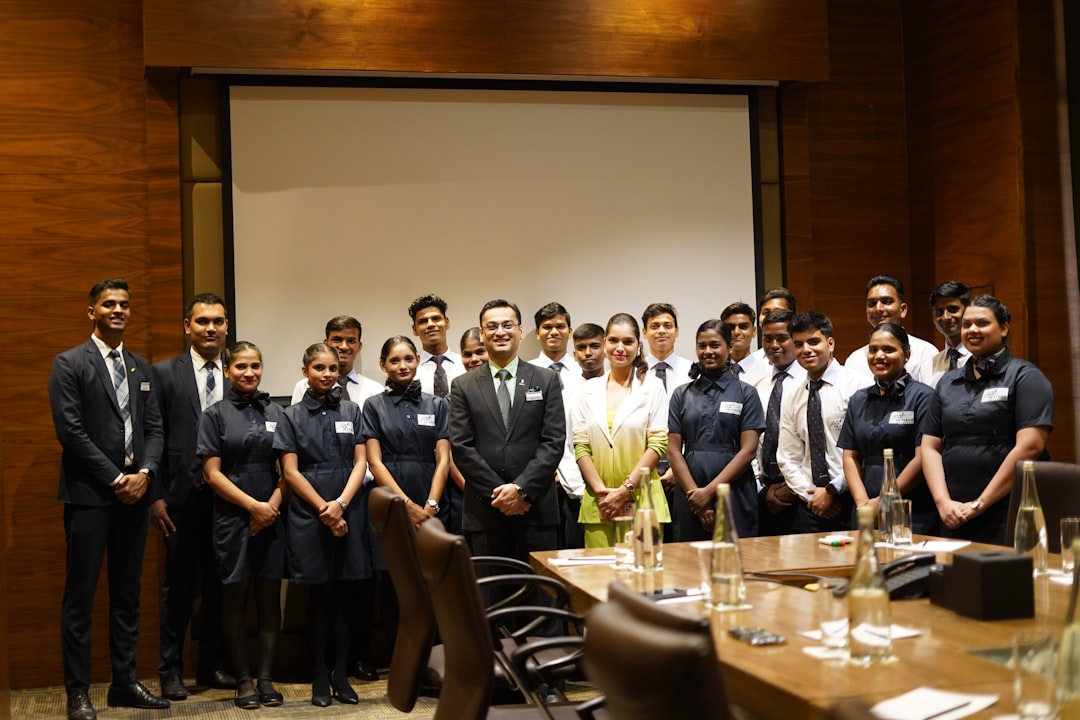
Space research and the next Indian chapter
Space research today carries more Indian fingerprints than most people outside the field realize. From Ames Research Center in California to Johnson Space Center in Houston, Indian-origin scientists are running experiments, leading programs, and designing the tools that will take humans to the Moon and beyond.
What strikes an outsider is how natural this feels from the Indian side. Science runs deep in Indian culture, and the ambition to look upward has been part of the national story since India launched its first satellite in 1975. The scientists in United States laboratories are not disconnected from that story. They are its next chapter.
If you follow space research and want to understand where it is going, follow the Indian-origin scientists shaping it. Their work is the clearest map of where humanity is heading next.

Discover more about space research
- India-U.S. Civil Space Joint Working Group, U.S. Embassy in India
- ISRO Annual Report 2025-26, Indian Space Research Organisation
- Three Indian American researchers earn NASA awards for visionary technology concepts, American Bazaar Online