

CONTACT
  • Login
  • Register
Upgrade
INDIAwebzine
Advertisement
  • Home
    • Our Authors
    • Media Kit
    • Contact
    • Cookie Policy
    • Terms and Conditions
  • News
  • Business
  • Lifestyle
    • Gastronomy
    • Sustainable living
    • Well-being
  • Culture
  • Sports
  • Travel
  • Global India
  • Insights
  • Local Guide
    • Activities in India
    • Hotels in India
    • Nightlife in India
    • Restaurants in India
    • Services in India
    • Shopping in India
  • Home
    • Our Authors
    • Media Kit
    • Contact
    • Cookie Policy
    • Terms and Conditions
  • News
  • Business
  • Lifestyle
    • Gastronomy
    • Sustainable living
    • Well-being
  • Culture
  • Sports
  • Travel
  • Global India
  • Insights
  • Local Guide
    • Activities in India
    • Hotels in India
    • Nightlife in India
    • Restaurants in India
    • Services in India
    • Shopping in India
No Result
View All Result
INDIAwebzine
No Result
View All Result
Home Luxury Lifestyle Sustainable living

Rainwater harvesting tips for home

Simple methods to collect monsoon rain at home and see a real difference in your water bill this season.

0
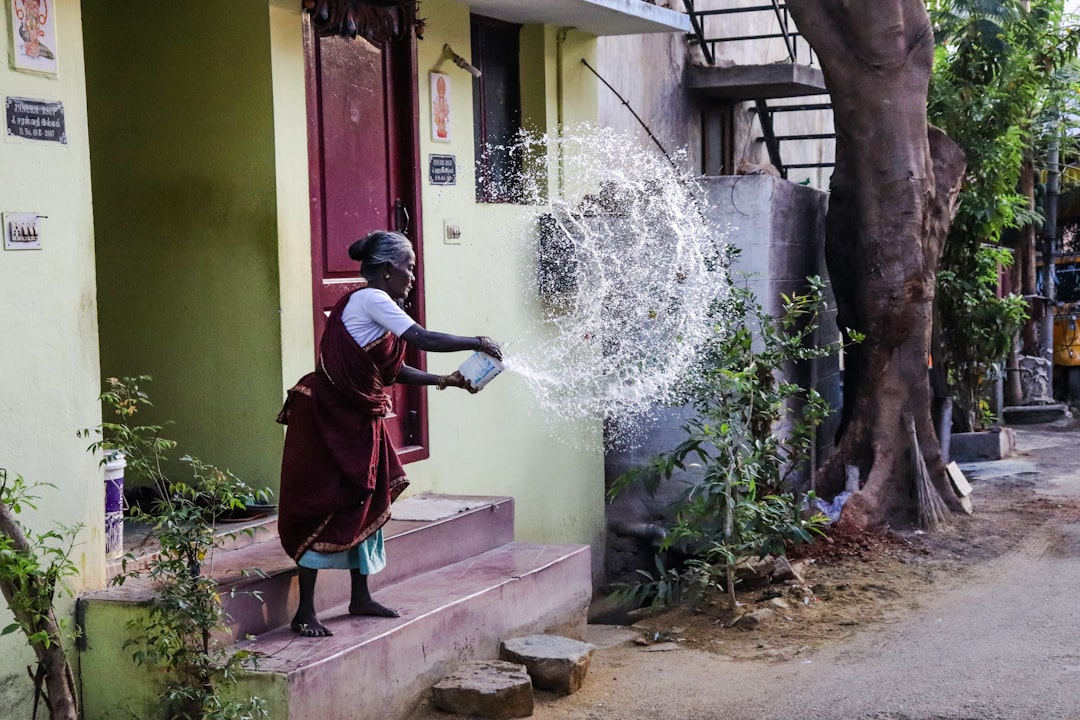
A woman using her rooftop rainwater harvesting setup during the monsoon season in an Indian home

Rainwater harvesting is a practice as old as India itself, and this monsoon season it can save your household money, water, and worry.

Why rooftop collection is the easiest place to start

India receives an average of 1,170 mm of rainfall each year, yet millions of families still face water shortages by March. The monsoon delivers water in abundance for a few months. Most of that water flows into drains instead of into homes. Rooftop collection changes that pattern directly and efficiently.

Your Local Guide to India Your Local Guide to India Your Local Guide to India

The method is simple. You connect gutters along your roof edge to a downpipe. That pipe carries water into a storage tank on the ground or below it. A basic mesh filter at the pipe entrance removes leaves and debris before water enters the tank.

For most urban Indian homes, a rooftop area of 50 square metres can collect thousands of litres in a single heavy shower. This water works well for toilets, garden plants, car washing, and floor mopping. Many families report cutting their municipal water use by 30 to 40 percent during the monsoon months with this setup alone.

How to use a first-flush diverter for cleaner water

The first rain of any shower carries dust, bird waste, and air pollutants from the rooftop surface. You do not want that water entering your storage tank. A first-flush diverter solves this problem without any complex equipment.

A diverter is a simple T-shaped pipe junction. It redirects the first few litres of each rainfall away from your main tank and into a small waste chamber. After that chamber fills, cleaner water flows automatically into your storage. You empty the waste chamber after each rain event.

This one addition improves your stored water quality considerably. It also reduces the load on your filter system. Many plumbers in cities like Bengaluru, Pune, and Chennai are familiar with this component and can install it in a few hours.

Reviving the kund: an ancient method that still works

Long before modern plumbing, communities across Rajasthan built underground storage chambers called kunds. A kund collects rainwater from a paved catchment area and channels it into a sealed underground tank. The earth around the tank keeps the water cool and clean for months.

You do not need a full kund to apply this principle at home. A small underground sump, built from reinforced cement or pre-cast concrete rings, serves the same purpose. You place the sump below your garden or courtyard. Rainwater from your rooftop or paved yard flows into it through a pipe.

Underground sumps protect water from evaporation, algae, and contamination. They also recharge the groundwater below your property, which benefits the whole neighbourhood. The government announced the modernisation of Rajasthan’s traditional rainwater harvesting system under MGNREGA, constructing reinforced concrete water storage tanks to combat water scarcity, showing that this ancient logic still holds strong today.


A man connecting a storage barrel to a downpipe as part of a home rainwater harvesting system

Expert perspective on rainwater harvesting at home

Household rainwater harvesting is no longer a niche practice in India. We see consistent adoption across residential segments, from small urban flats with terrace access to large independent houses in peri-urban zones. The economics are straightforward: a well-installed rooftop system recovers its cost within 2 to 3 monsoon seasons through reduced municipal water bills and lower tanker dependency. The greater benefit, however, is groundwater recharge. When thousands of homes in a single district adopt percolation pits or underground sumps, the cumulative effect on local aquifer levels is measurable and significant. We also observe that households which combine rooftop collection with a first-flush diverter and a simple sand filter see far better water quality outcomes and use the stored water for a wider range of domestic purposes. The technology barrier is genuinely low. Most installations require only a plumber and locally available materials.

Industry perspective, water management and sustainable infrastructure professionals in India

Setting up a rain barrel system on a balcony or terrace

Not every home has a full rooftop and a garden. Many families in Indian cities live in flats with a balcony or an open terrace. A rain barrel system works well in these spaces and requires very little investment.

You place 1 or more large food-grade barrels under a downpipe or directly in an open area where rain falls. Each barrel has a tap near the base for easy access. A tight-fitting lid keeps mosquitoes out. A simple overflow pipe at the top connects multiple barrels in a series so each one fills before water moves to the next.

200-litre barrels are widely available at hardware stores across India for a modest cost. 2 barrels connected in series can store enough water to handle toilet flushing and plant watering for several days after a good rain. This is monsoon conservation at its most accessible level.

-

A woman artisan applies traditional block printing with natural dyes onto cotton fabric in a Jaipur workshop

Natural dyes making a fashion comeback

23/07/2026
A smiling Indian woman arranging terracotta bowls and clay pots in a plastic-free kitchen at home

Plastic-free kitchen brands worth switching to

15/07/2026
Indian woman carefully folding handloom cotton fabric indoors during the monsoon season

Handloom cotton monsoon care guide

07/07/2026
A young Indian woman sorting vegetable peels into a composting bin in her apartment kitchen

Composting in a small Indian apartment

29/06/2026
AIndian woman in a breathable linen kurta demonstrates why ethical fabrics are best choice for India's humid monsoon season.

Ethical fabrics that beat monsoon humidity

24/06/2026
Sustainable fashion designers creating eco-friendly spring collections in India

India Spring Fashion 2026: 7 Sustainable Designers

12/03/2026

A family in India examining their garden percolation pit used for rainwater harvesting and groundwater recharge

Building a percolation pit for groundwater recharge

A percolation pit does not store water for direct use. Instead, it sends rainwater deep into the ground, where it recharges the local aquifer. This method is especially valuable in cities where groundwater levels fall every year.

You dig a pit of roughly 1 metre by 1 metre by 1.5 metres deep in your garden or open yard. You fill it with layers of gravel, sand, and broken bricks. Rainwater from your rooftop enters the pit through a pipe and filters slowly through these layers into the soil below.

Rainwater harvesting systems are increasingly used for groundwater recharge, reducing the burden on municipal water supplies and promoting conservation. A percolation pit costs very little to build and requires no maintenance except clearing the top layer once a season. It is also one of the best things a homeowner can do for the community around them.

Start your rainwater harvesting journey this monsoon

Rainwater harvesting is not a future goal for Indian homes. It is a present solution with immediate results. These 5 methods range from a simple barrel on a balcony to an underground sump inspired by centuries of Indian water wisdom. Each one reduces your dependence on municipal supply, lowers your bill, and gives back to the earth.

India’s rainwater harvesting industry is emerging as a cornerstone of sustainable water management amid rising water scarcity and rapid urbanisation, with the market projected to grow at a CAGR of 10.74 percent between 2024 and 2028. That growth reflects a choice millions of families are already making. Start rainwater harvesting this season with even 1 method. Share what you set up with the INDIAwebzine community and inspire your neighbours to do the same.

Discover more about rainwater harvesting

  • Ministry of Jal Shakti: Rainwater Harvesting Guidelines
  • India Rainwater Harvesting Market Report 2025, Research and Markets
  • Is rainwater harvesting becoming a must in India? Selina Wamucii Analysis

author avatar
Arjun Mehta
Arjun Mehta is a Mumbai-based journalist with a background in economics from IIM Ahmedabad. He writes about India's startup ecosystem, foreign investment landscape, and the country's rapid digital transformation. His work blends sharp market analysis with real stories from entrepreneurs building India's next chapter.
See Full Bio
Previous Post

Handmade pricing for Indian D2C sellers

Next Post

Reading nook ideas for monsoon season

Related Posts

A woman artisan applies traditional block printing with natural dyes onto cotton fabric in a Jaipur workshop
Sustainable living

Natural dyes making a fashion comeback

23/07/2026
A smiling Indian woman arranging terracotta bowls and clay pots in a plastic-free kitchen at home
Sustainable living

Plastic-free kitchen brands worth switching to

15/07/2026
Indian woman carefully folding handloom cotton fabric indoors during the monsoon season
Sustainable living

Handloom cotton monsoon care guide

07/07/2026
A young Indian woman sorting vegetable peels into a composting bin in her apartment kitchen
Sustainable living

Composting in a small Indian apartment

29/06/2026
AIndian woman in a breathable linen kurta demonstrates why ethical fabrics are best choice for India's humid monsoon season.
Sustainable living

Ethical fabrics that beat monsoon humidity

24/06/2026
Next Post
A woman sits in a cozy reading nook near a rain-streaked window, wrapped in a cotton throw, holding a book

Reading nook ideas for monsoon season

Leave a Reply Cancel reply

Your email address will not be published. Required fields are marked *

Truelang AI WordPress Translation Plugin Truelang AI WordPress Translation Plugin Truelang AI WordPress Translation Plugin
No Result
View All Result

Our Focus

INDIAwebzine is your international window on India: sustainable lifestyle, business, culture, sports and events for a global audience drawn to the subcontinent's vibrant and diverse scene.

Our Readers

INDIAwebzine addresses readers who engage with India at a high level: professionally, financially, strategically, and as decision-makers in their fields.

Our Approach

Lifestyle, travel, and culture are integrated as context and indicators of economic dynamism, purchasing power, and soft power — not standalone entertainment.

Recent Posts

  • Digital labels: Indian classical music goes global
  • Monsoon dal recipes from 7 Indian states

© 2025 INDIAwebzine by NOOR & NOOR.

Welcome Back!

Login to your account below

Forgotten Password? Sign Up

Create New Account!

Fill the forms bellow to register

All fields are required. Log In

Retrieve your password

Please enter your username or email address to reset your password.

Log In
Manage Consent
To provide the best experiences, we use technologies like cookies to store and/or access device information. Consenting to these technologies will allow us to process data such as browsing behavior or unique IDs on this site. Not consenting or withdrawing consent, may adversely affect certain features and functions.
Functional Always active
The technical storage or access is strictly necessary for the legitimate purpose of enabling the use of a specific service explicitly requested by the subscriber or user, or for the sole purpose of carrying out the transmission of a communication over an electronic communications network.
Preferences
The technical storage or access is necessary for the legitimate purpose of storing preferences that are not requested by the subscriber or user.
Statistics
The technical storage or access that is used exclusively for statistical purposes. The technical storage or access that is used exclusively for anonymous statistical purposes. Without a subpoena, voluntary compliance on the part of your Internet Service Provider, or additional records from a third party, information stored or retrieved for this purpose alone cannot usually be used to identify you.
Marketing
The technical storage or access is required to create user profiles to send advertising, or to track the user on a website or across several websites for similar marketing purposes.
  • Manage options
  • Manage services
  • Manage {vendor_count} vendors
  • Read more about these purposes
View preferences
  • {title}
  • {title}
  • {title}
No Result
View All Result
  • Home
    • Our Authors
    • Media Kit
    • Contact
    • Cookie Policy
    • Terms and Conditions
  • News
  • Business
  • Lifestyle
    • Gastronomy
    • Sustainable living
    • Well-being
  • Culture
  • Sports
  • Travel
  • Global India
  • Insights
  • Local Guide
    • Activities in India
    • Hotels in India
    • Nightlife in India
    • Restaurants in India
    • Services in India
    • Shopping in India

© 2025 INDIAwebzine by NOOR & NOOR.

Verified by MonsterInsights
enEnglishfrFrançaishiहिन्दी