
Ancient stepwells across India are among the world’s most underrated heritage monuments, and building an itinerary around them changes the way you see the entire country.
What makes a stepwell worth traveling for
India is famous for its incredible historical architecture, but one of its most iconic contributions is the stepwell. What began as an answer to water scarcity evolved into integral community spaces, adorned with detailed architecture and stonework. These structures are not ruins you pass on the way to somewhere else. They are the destination.

India is full of wonders that you can admire by looking up, but sometimes the most mesmerizing ones are discovered by looking down. Among them, stepwells, known as baolis and vavs in different regions, are architectural masterpieces that tell a centuries-old story where water becomes sacred and architecture serves as a cradle of beauty.
The earliest known stepwells were built by the Indus Valley Civilization. The oldest known example in India is found at the archaeological site of Dholavira in Gujarat, built around 3000 BCE. So when you descend into one, you descend into something very old indeed.
Ancient stepwells to visit in Gujarat
Gujarat holds the greatest concentration of stepwells, and the state rewards a slow, dedicated itinerary. The best and most popular stepwells are found in the states of Gujarat and Rajasthan, which should form the core of any stepwell-focused itinerary. In Gujarat, the cities of Ahmedabad and Patan are the 2 best bases for exploring stepwells.
Rani ki Vav, Patan is the only stepwell in India with its own UNESCO World Heritage listing. According to historical texts, Rani ki Vav was commissioned in 1063 CE under the Chaulukya dynasty and took 20 years to build. It is often described as an “inverted temple.” For centuries, the stepwell lay buried beneath mud and silt from the nearby Saraswati River. It was rediscovered in the 1940s and only fully excavated and restored in the 1980s. Every inch of its walls and pillars is covered in intricate carvings of Hindu iconography. Allow 3 hours minimum here.
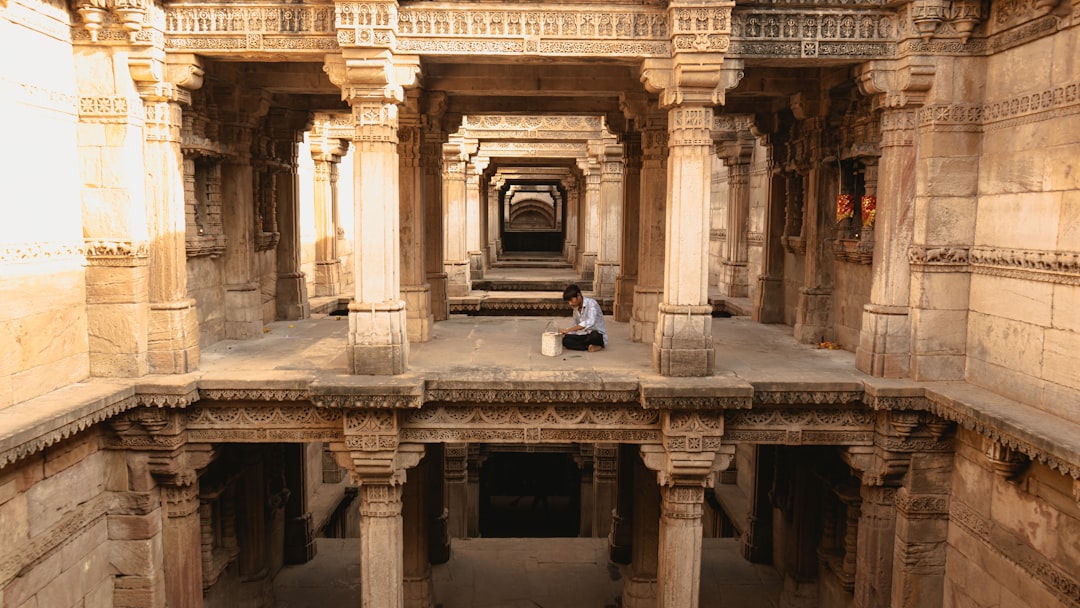
Adalaj Vav, Ahmedabad carries one of the most compelling origin stories in Indian heritage. Adalaj Vav was commissioned in 1498 by Queen Rudabai. According to legend, the kingdom was suffering from a severe water shortage, and King Rana Veer Singh decided to construct a large stepwell. The king began construction but died in a battle before it could be completed. Adalaj Stepwell represents a combination of Hindu and Islamic architecture and is a multi-storey visual delight. Its elegant pillars, sculptured designs, balconies, and spacious rooms were used by travellers to take rest and have some water.

Surya Kund, Modhera sits directly in front of the Modhera Sun Temple and rewards visitors who combine both sites in a single trip. Surya Kund is the water tank in front of the Modhera Sun Temple, dated to 1026 CE under King Bhima I of the Solanki dynasty. The engineering is a stepwell in plan, with 108 small shrines stepping down on 4 sides. The kund sits 30 km from Patan and 100 km from Ahmedabad, making it a logical and rewarding addition to the Gujarat loop.
Ancient stepwells to explore in Rajasthan
Rajasthan brings a different character to these monuments. Stepwells in this region are much deeper, have room structures on one or 2 sides, and travellers can rest in them, as the temperature inside is 5 degrees lower than outside. That natural cooling makes morning visits both practical and pleasant.
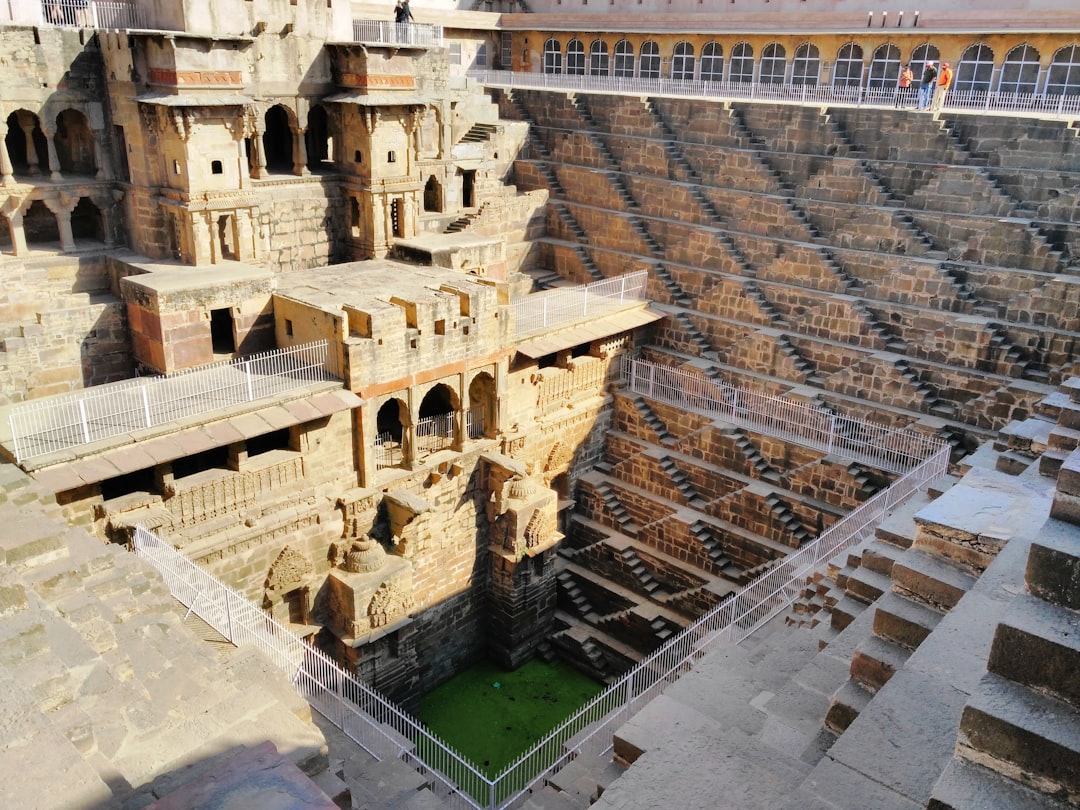
Chand Baori, Abhaneri is the site that stops most visitors mid-breath. The Chand Baori in Abhaneri is among the deepest stepwells in the world, with more than 3,500 tiny steps perfectly symmetrical in arrangement. Its cool, shaded rooms could be used to provide relief from desert heat. The architectural geometric form, huge size, and serene central tank impress visitors. It sits roughly 95 km from Jaipur, and the drive through the rural landscape is itself part of the experience.





Panna Meena ka Kund, Jaipur offers something more intimate. Located near the renowned Amber Fort, the pale-yellow Panna Meena ka Kund was constructed in the 16th century and is widely admired for its symmetrical beauty and play of light and shadows. Early morning visits, before tour groups arrive from Amber, give you the stepwell almost entirely to yourself.
Toorji Ka Jhalra, Jodhpur has its own dramatic modern story. Unlike some static ruins, Toorji Ka Jhalra represents a living part of modern urban culture. Built in the 1740s by the queen consort of Maharaja Abhay Singh, this stepwell was constructed using signature rose-red sandstone. For decades, Toorji Ka Jhalra suffered from severe neglect. As modern plumbing became common, it lost its civic function and became a garbage dump, completely submerged under debris and stagnant water for nearly a century. However, a recent community-led cleanup successfully restored the structure to its former glory.
Expert perspective on visiting these sites
Stepwells ask visitors to slow down, and that is precisely why they reward you. When you walk into a site like Chand Baori or Rani ki Vav, you are not looking at one architectural moment. You are looking at centuries of decisions, each level telling you something different about water, faith, and the people who lived here. The geometry is not decoration. It is engineering made visible. Travellers who plan even 2 or 3 stepwells into a Rajasthan or Gujarat circuit consistently describe them as the most memorable stops of the trip. The key is to visit in the morning, before the heat rises and before the tour buses arrive. That first hour, with the light falling into the lower levels and the carvings in shadow, is when these places are truly themselves.
Industry perspective, heritage and cultural tourism professionals in Gujarat and Rajasthan
Agrasen ki Baoli: the ancient stepwell hiding in Delhi
Most people who visit Delhi never find this one. Agrasen ki Baoli stands in the heart of Delhi as a time capsule. This ornate stepwell is a magnificent example of architecture and ancient engineering skills. Its multi-storey building, lovely archways, and open bricks are beautiful and photogenic. With 15 meters width, 60 meters length, and 103 stone steps, it looks impressive.
It sits a short walk from Connaught Place, which means you can combine it with a day already built around central Delhi. Delhi Tourism has reopened the upper terrace at Agrasen ki Baoli after a structural review, so the full experience is now accessible again. Allow 45 minutes, stay near the lower levels for the strongest photography light, and visit on a weekday morning for the quietest conditions.
Plan your ancient stepwells itinerary
There are more than 3,000 stepwells built between the 7th and mid-19th centuries across the semi-arid landscape of Gujarat and Rajasthan. Water is largely associated with the feminine in India, and stepwells were also special spaces for women, to fetch water, meet friends, and spend time away from domestic work. That social and cultural depth is what separates a stepwell visit from a simple sightseeing stop.
Ancient stepwells reward a traveller who slows down and plans deliberately. The Gujarat circuit (Rani ki Vav, Adalaj, Surya Kund) connects naturally with Ahmedabad as a base. The Rajasthan circuit (Chand Baori, Panna Meena ka Kund, Toorji Ka Jhalra) maps onto the classic Jaipur to Jodhpur route. Add Agrasen ki Baoli as your Delhi day trip, and you have a full, meaningful arc across 3 states. These ancient stepwells are not footnotes on an India trip. Build the trip around them, and everything else falls into place.

Discover more about ancient stepwells
- Rani-ki-Vav UNESCO World Heritage Site
- India stepwells travel guide 2026 (Ruins and Remnants)
- India heritage and sustainable tourism: UNESCO strategic conclave 2025