

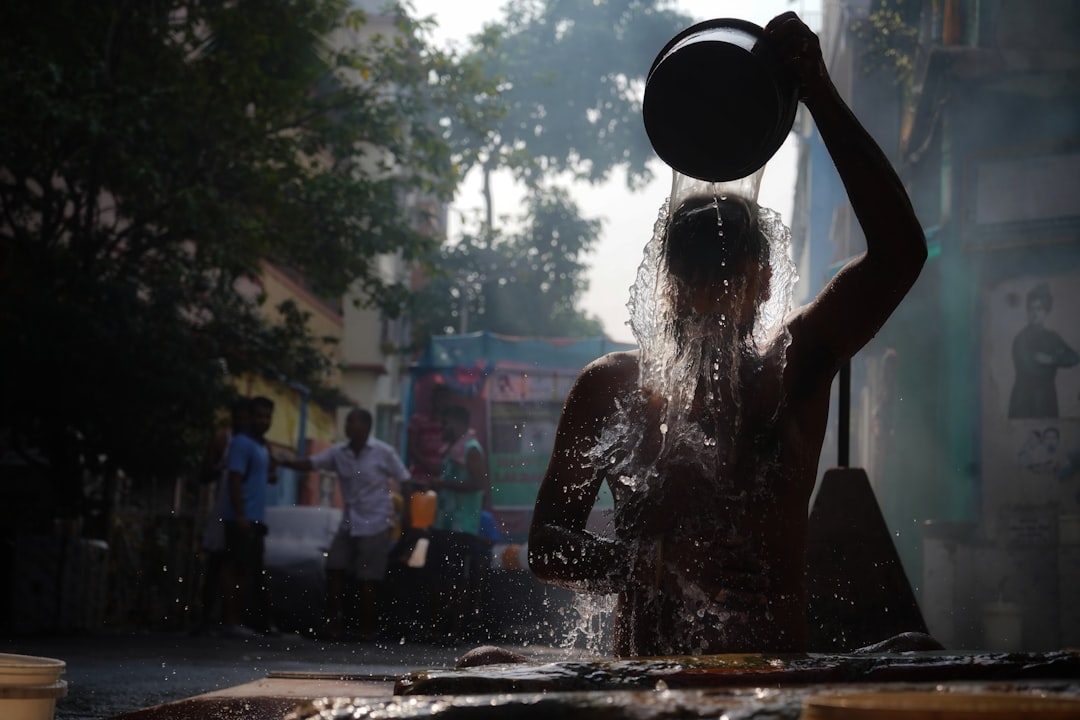
Monsoon hair is a shared story across India. Every June, millions of people step outside, feel the thick, wet air, and watch their carefully styled strands expand into a frizzy cloud within minutes.
Why humidity attacks your hair in June
The southwest summer monsoon sweeps across India beginning in late May or early June, and it brings more than just rain. It brings dense, moisture-heavy air that your hair absorbs like a sponge.

Your hair is naturally hygroscopic and acts like a sponge for environmental moisture. On normal days, the outer cuticle scales lie flat and keep the hair smooth. High ambient moisture disrupts this. The science comes down to hydrogen bonds breaking. Excess water vapor enters the shaft, forcing individual strands to swell and bend outward into a rough, tangled texture.
Indian summers bring 70 to 90 percent humidity levels that disrupt your hair’s hydrogen bonds, causing the cuticle to swell and frizz uncontrollably. June is often the worst month because the monsoon arrives fresh and the air is saturated almost every day.
Which hair types suffer most from monsoon frizz
Not every head of hair reacts the same way. Some types are far more at risk when the rains begin.
People with wavy and curly hair are more susceptible to frizzy hair during monsoons because those hair types have higher moisture absorption abilities. Chemically treated hair often lacks natural oils and struggles to retain moisture. Fine, dry, damaged, and over-processed hair tends to have a rougher cuticle layer. That rough surface makes it easier for moisture from the humid air to penetrate the hair shaft, cause it to swell, and lift the cuticle into a frizzy appearance.
Frizzy hair is one of the most common hair concerns across India, particularly in humid cities like Mumbai, Kolkata, Chennai, and coastal regions where moisture levels remain high throughout the year. If you live in any of those cities, you already know this feeling well.

5 ways to control monsoon hair frizz
1. Pre-wash oil massage
This is where India’s oldest beauty wisdom becomes your strongest tool. A warm oil massage before washing helps manage frizz. Leave the oil in for 1 to 2 hours and then rinse. A quick post-wash ritual is also effective: take 3 to 4 drops of a dry oil like jojoba or rosehip, run it through the lengths of damp hair, and let it air dry.
Traditional choices like coconut oil and neem oil work well in this step. Neem oil blends also soothe scalp fungal issues that are common in high humidity. Apply oil at least twice a week during June for best results.
2. Switch to a sulfate-free shampoo
Sulfates can strip hair of its natural oils, making it dry and more prone to frizz. A gentler formula preserves the protective barrier your strands need to resist outside moisture. A herbal hair wash using reetha, shikakai, amla, and bhringraj powders is gentle and works for most hair types. These ingredients are widely available at local pharmacies and kirana stores across India.
3. Use a leave-in conditioner and anti-frizz serum
A leave-in conditioner is essential during the monsoon season. It locks in moisture, nourishes your strands, and helps combat the dryness that often comes with rainy weather. Apply it while hair is still damp, not dry. The best serum for frizzy hair contains silicones and humidity-blocking polymers that create an invisible barrier against moisture. While keratin treatments provide long-term restructuring, a quality anti-frizz serum offers immediate daily protection. Look for serums containing dimethicone, cyclopentasiloxane, or amino acids. These ingredients form a protective layer that repels water molecules while still allowing your hair to breathe.
4. Rinse with cool water and reduce heat styling
Cold or lukewarm water rinses seal the hair cuticle and lock out moisture. Pat dry with a cotton t-shirt or microfiber towel, rather than rubbing vigorously, to avoid cuticle damage. Limit heat styling and, if absolutely necessary, use the coolest setting with a heat protectant. The monsoon is not a good time to heat-style because it can further dehydrate and weaken your hair.
5. Choose protective styles and a wooden comb
To protect your hair from excess moisture in the air, opt for styles like ponytails or buns. These styles help maintain your hair’s texture and reduce frizz caused by humidity. Plastic combs can generate static electricity, which leads to more frizz. Instead, use a wooden comb during the monsoon season. It is gentler on your hair, makes detangling easier, and reduces frizz. A wooden comb is also a beautiful nod to our dadi’s bathroom shelf.





What a hair care professional recommends
High humidity causes the hair shaft to absorb moisture from the air, which leads to swelling and frizz across all hair types. It also interferes with the hair’s natural oiliness, making it harder to manage. The first thing to fix is your shampoo choice. Your usual routine is not enough during monsoon. You need products that work with the season, not against it. Add a strong-hold, humidity-resistant gel to damp hair before drying. The gel forms a protective cast around each strand before the humidity has a chance to disrupt the cuticle. Address the problem at its root, before it appears on the surface.
Industry perspective, hair care and trichology professionals in India
Scalp health matters just as much as the strand
Most people focus only on the visible part of their hair during monsoon. The scalp, however, needs equal attention.
Humidity throws everything off balance. Some people end up with flat, greasy roots. Others deal with dry ends, dandruff, and even fungal infections. Both conditions can get worse when you ignore your scalp during the rainy season.
It is not just about what goes on your head. What you eat matters just as much. Make sure you get enough protein, iron, zinc, omega-3s, and biotin. Drink enough water, sleep well, and try to manage stress. A healthy body produces stronger hair from the inside out, and this is something Ayurveda has said for centuries.
Rainwater may seem harmless, but prolonged exposure can cause scalp irritation and worsen issues like dandruff. Always protect your hair from getting wet in the rain to avoid these problems. A simple cotton scarf or an umbrella is enough protection during a quick walk outside.

Conclusion: make monsoon hair your strength
Monsoon hair does not have to be a problem you accept every June. The science is clear, the remedies are within reach, and India’s own traditional toolkit is richer than any imported product shelf. Start with an oil massage, switch to a gentle shampoo, and seal your cuticles with cool water. These small actions protect your monsoon hair from the first rains right through to September. Try these 5 steps this week, and then share what worked for you in the comments below. Your hair and your confidence deserve this care.
Discover more about monsoon hair
- India Meteorological Department: Weather and Climate Information
- Indian Journal of Dermatology: Peer-Reviewed Research on Skin and Hair Health in India
- BeautyMatter: The Haircare Trends Set to Define 2026, Including India-Specific Formulations