

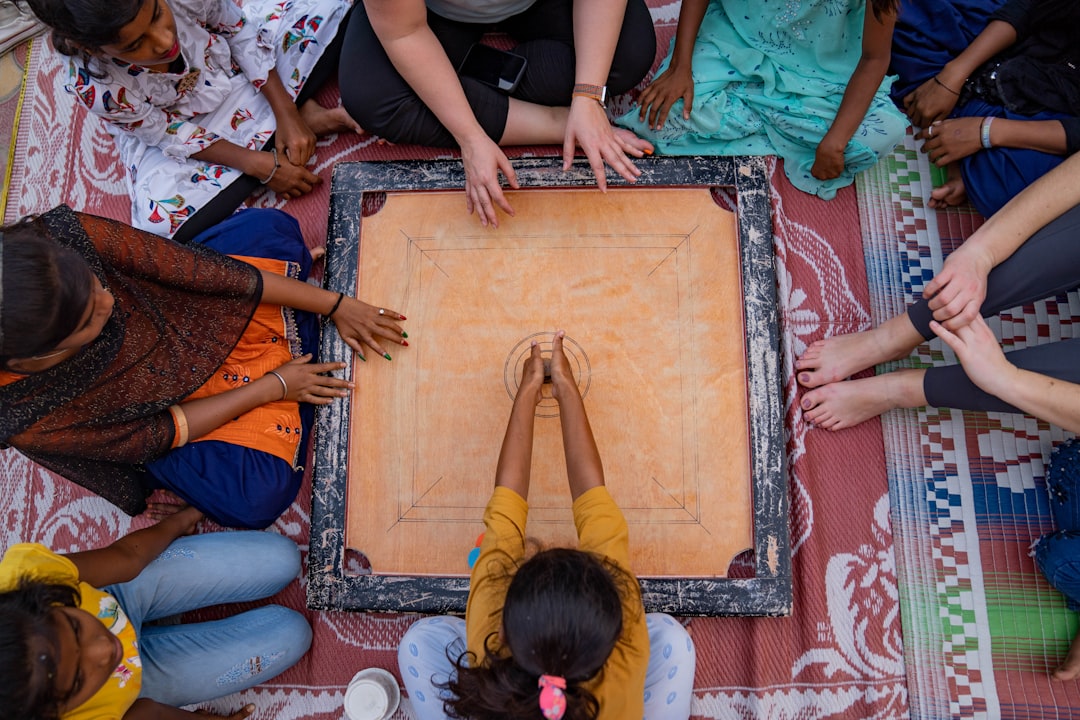
Indian games carry thousands of years of culture, strategy, and joy, and school holidays are the best time to pass that gift to your children.
Why traditional games still matter today
India has several traditional games and sports, and some of them have been played for thousands of years. Today, many children spend their free time on screens. However, these ancient games offer something that a phone app simply cannot. Many types of traditional games, such as games of physical skill, strategy, memory, and rhythmic games, play an important role in the development of children’s minds, cognitive ability, and motor skills, including balance and coordination. They also develop social skills like collaboration, cooperation, and problem-solving.

These old games in India were not recreational distractions from learning. They were known to build the same skills that formal academic study was meant to build. This is why they were used in royal courts, monasteries, and everyday homes. That philosophy is still relevant. A school holiday gives every family a chance to sit together and play.
The Fit India movement has contributed to the revival of traditional Indian games, with schools now required to include such games as part of physical education. So when your child learns these games at home, they also gain an advantage at school.
1. Pachisi: the royal board game
Pachisi, also known as Chaupar, is a board game that is prominent because it features in the Mahabharata, and is also known as one of the games the Mughal kings enjoyed playing. Pachisi was a cross-and-circle board game found in ancient Indian texts. Each player throws cowrie shells (used as dice) and moves pieces on the board until someone gets all their pieces to the finish zone.
Emperor Akbar played a human-sized version of Pachisi in his palace courtyard at Fatehpur Sikri, with servants acting as living pieces. You do not need a palace to enjoy it. A simple printed board and a set of cowrie shells or dice are enough. Pachisi rewards players who are patient, who understand probability, and who plan instead of making quick decisions.
2. Moksha Patam: the original snakes and ladders
Most children already know Snakes and Ladders. Very few know that India created it. Moksha Patam was an ancient Indian game believed to have been invented in the 13th century AD, though certain sources suggest it existed as early as the 2nd century BCE. This game became the blueprint for the modern-day game of Snakes and Ladders.

In this game, players encounter ladders on squares representing good deeds and virtues, which take them closer to 100. That number symbolises moksha, or salvation, the objective of the game. The game teaches children about numbers, counting, and the concept of cause and effect. It also helps develop patience and resilience when facing setbacks.
Tell your children the full story of this game. They will look at the familiar board with completely new eyes.
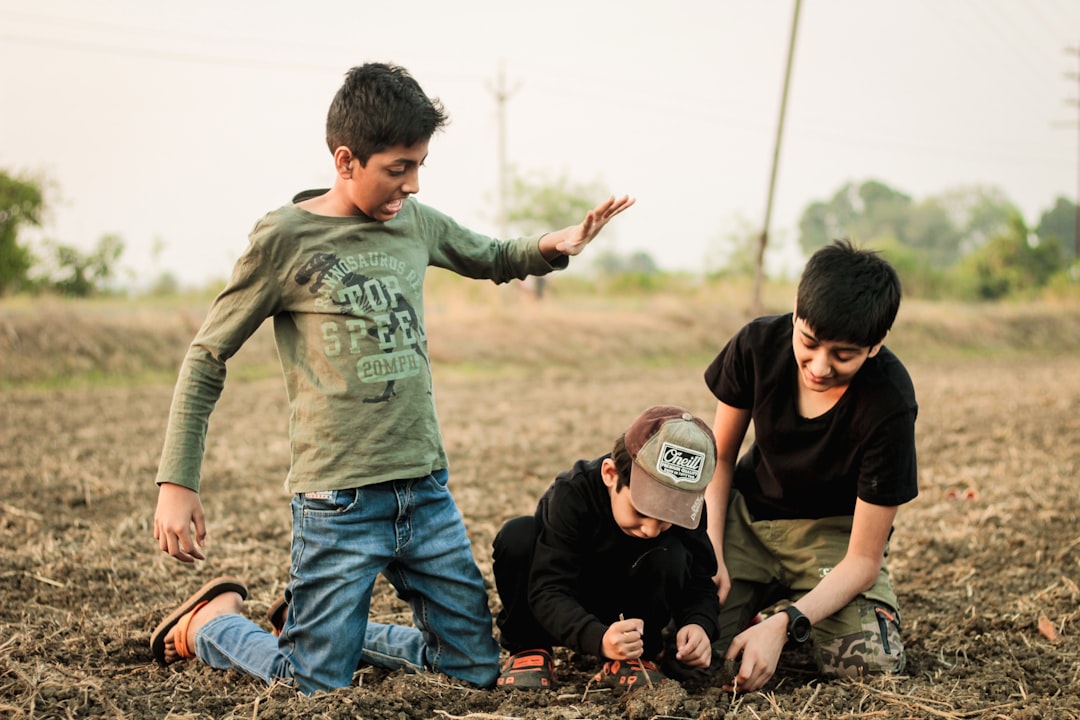


3. Chaturanga: the ancestor of chess
Chaturanga was an ancient Indian strategy game that evolved into the modern-day game of chess. Named after the four limbs of the army, namely infantry, cavalry, elephantry, and chariotry, this game has its origins in the Gupta Empire, with references dating to the 6th century CE.
Like the modern-day version, Chaturanga was played on an uncheckered eight-by-eight board with moving pieces representing various parts of an army, with the objective being to checkmate the opponent’s king. While modern chess has transformed over centuries, its Indian DNA remains evident in its sophisticated gameplay mechanics, fostering critical thinking and strategic excellence.
Teaching your child Chaturanga, or even its direct descendant chess, connects them to an Indian intellectual tradition that changed the world. This is heritage in action.
Expert perspective on Indian games and children’s development
Traditional Indian games are far more than simple entertainment. Research shows that these games develop the whole child: the body, the mind, and the social self. When a child plays Pallankuli or Pachisi, they practise counting, planning, and reading other players, all at the same time. These games also create what modern educators call a Zone of Proximal Development. A younger child learns from an older sibling, who in turn learns from a grandparent. That chain of teaching is one of the most powerful learning systems ever designed. No app or classroom exercise can fully replicate the cultural depth and intergenerational connection these games create. Families who play traditional Indian games together are not just having fun. They are transmitting something precious.
Industry perspective, early childhood education and traditional games professionals in India

4. Pallankuli: the maths game from the south
Pallankuli is a traditional board game from South India, played on a wooden board with multiple pits and seeds or shells. Players distribute these counters across the pits following specific rules, requiring mathematical calculation and strategic thinking. This ancient game improves arithmetic skills, concentration, and planning abilities.
Popular among women and children, Pallankuli teaches resource management and decision-making. Different regions know it by various names like Ali Guli Mane or Vamana Guntalu, but its core principle of developing mathematical ability remains constant across all variations.
You can carve a simple version from wood, or find ready-made boards in most South Indian markets. Pallankuli finds its origins in South India. Played earliest in Tamil Nadu, the game spread throughout the southern states and even to Sri Lanka and Malaysia. This is a game with a truly wide reach.
5. Gilli Danda: the outdoor folk classic
Gilli Danda is one of the most exciting traditional Indian games. It was thought to have originated 2,500 years ago. This game is considered the root of some modern games, like Cricket, Softball, and Baseball.

The game uses 2 simple sticks. The smaller, oval-shaped wooden piece is called the Gilli, and the longer stick is called the Danda. One player places the Gilli in a small pit in the ground, then uses the Danda to flip it into the air and strike it as far as possible. The opposing team tries to catch it. Many of these traditional games do not require much equipment or playing space.
This is the perfect holiday game for a park, a terrace, or any open ground. Children build hand-eye coordination and concentration. Parents and grandparents can join in with ease.
6. Kancha: the glass marble game
Kancha is the beloved marble game that children across North India played for generations. Each player uses a glass marble, called a Kancha, to strike and collect the other players’ marbles. Traditional games of India help promote social interactions and teamwork. They improve physical development, brain stimulation, concentration, and problem-solving skills. More importantly, these games help uphold India’s rich tradition and enlighten children about it.
Kancha costs almost nothing to buy or play. Children learn fine motor control, distance calculation, and graceful winning and losing. The game needs only a flat surface and a pocket full of marbles. These games do not need fancy equipment, just open space and willing hearts.
Start playing Indian games this holiday
For kids today, learning how to play these Indian games links their own play habits to a long history of smart people that goes back more than 2,000 years. Every school holiday is a chance to build that link. Choose 1 game this week and teach it to your child with the full story behind it. Indian games do not need batteries or Wi-Fi. They need a family that is ready to sit together, play together, and remember together. Grandparents at home can also share their playtime stories and teach these games wherever they can. It is a lovely way for generations to connect. Celebrate Indian games, and give your child a holiday they will remember for life.
Discover more about Indian games
- Fit India Movement: Official Portal
- Indian Traditional Games: An Intangible Cultural Heritage to Promote Good Life among Children (Research Article, Scholars Middle East Publishers, 2025)
- NCERT Updates Class 7 Curriculum with Indian Cultural Games and Activities