
CONTACT
  • Login
  • Register
Upgrade
INDIAwebzine
Advertisement
  • Home
    • Our Authors
    • Media Kit
    • Contact
    • Cookie Policy
    • Terms and Conditions
  • News
  • Business
  • Lifestyle
    • Gastronomy
    • Sustainable living
    • Well-being
  • Culture
  • Sports
  • Travel
  • Global India
  • Insights
  • Local Guide
    • Activities in India
    • Hotels in India
    • Nightlife in India
    • Restaurants in India
    • Services in India
    • Shopping in India
  • Home
    • Our Authors
    • Media Kit
    • Contact
    • Cookie Policy
    • Terms and Conditions
  • News
  • Business
  • Lifestyle
    • Gastronomy
    • Sustainable living
    • Well-being
  • Culture
  • Sports
  • Travel
  • Global India
  • Insights
  • Local Guide
    • Activities in India
    • Hotels in India
    • Nightlife in India
    • Restaurants in India
    • Services in India
    • Shopping in India
No Result
View All Result
INDIAwebzine
No Result
View All Result
Home Creativity

Block printing at home with Indian stamps

Bring a thousand-year-old Indian craft to your kitchen table using carved wooden blocks and natural pigments.

0
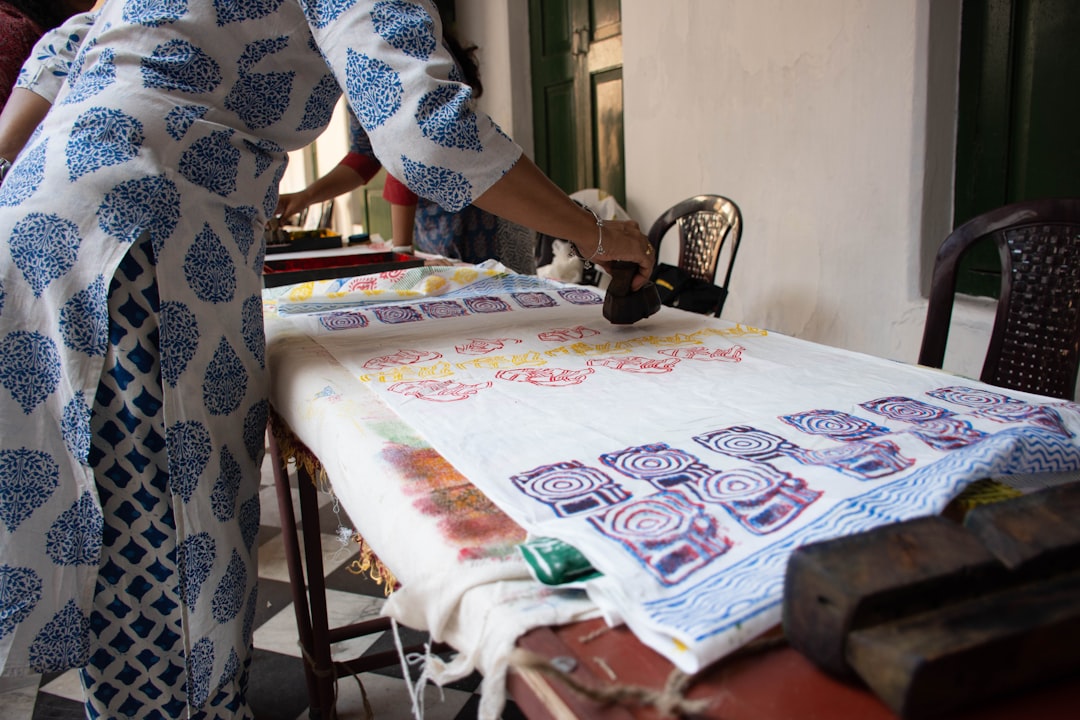
A woman carefully pressing an Indian carved wooden stamp onto cotton fabric during a block printing session at home

Block printing at home is one of the most direct ways a person from outside India can put their hands on a tradition that stretches back more than a thousand years, and the tools are simpler than you might expect.

Your Local Guide to India Your Local Guide to India Your Local Guide to India

What block printing actually is

Block printing is an ancient technique used to print designs or patterns on textiles using wood blocks and natural dyes. The process is exactly what the name describes. You press a carved block into pigment, then press it onto fabric. The result is a repeated motif, slightly imperfect, unmistakably handmade.

The art of block printing goes back over a thousand years, practiced by traditional artisans across India. The process has been widely practiced in Rajasthan since the 12th century, and it is most concentrated in a small village called Bagru, 30 kilometers from Jaipur, as well as in Sanganer, Barmer, and Jaipur itself. When you press a wooden block onto cotton at home, you are using the same basic method that artisans in those villages use today.

From Jaipur’s bold floral patterns to the intricate Ajrakh of Kutch, each region has developed its own story with carved wooden blocks and natural dyes. Understanding this variety helps you choose a block with meaning, not just a shape that looks decorative.

Choosing your wooden stamps

Wooden blocks are hand carved by craftsmen, mostly from teak wood. The treatment of teak requires the wood to be soaked in oil for 10 to 15 days before it can be carved into the desired design. When you buy a block, you are buying the result of that preparation.

Indian wood stamps are engraved with highly detailed motifs, often depicting attributes of nature such as animals, plants, and deities, as well as geometric patterns. For a first session at home, choose a single bold motif. A lotus, an elephant, or a simple geometric repeat all work well. Avoid stamps with very fine lines until you have a feel for how much pigment to use.

Soaking a new wooden block in mustard oil before first use seals the pores and improves ink adhesion significantly. Do this the night before your session. Wipe the block dry before you apply pigment, and your first prints will come out clean rather than muddy.

Preparing your pigments

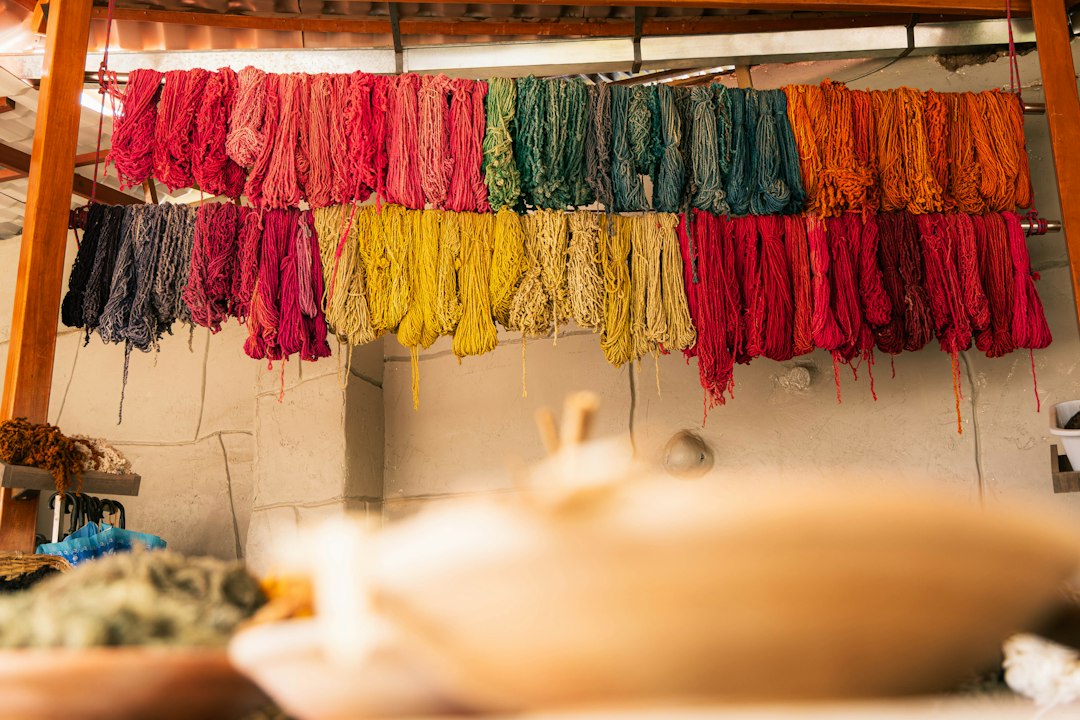
Natural pigments are what separate a genuine block printing session from basic craft stamping. Unlike synthetic dyes, which use petroleum-based chemicals, natural dyes are drawn from plants, minerals, and even metals, each bringing its own character.

Turmeric, indigo, madder root, pomegranate rind, and marigold flowers all lend their colors to fabrics without harming the environment. For a home setup, you can buy ready-mixed natural fabric pigments from craft suppliers, or you can prepare a simple paste. Pigments like ferrous sulfate and alum can be boiled in water and mixed with tamarind seed powder to make a paste that acts as black and red dyes.

Pour your pigment into a flat tray or plate. Place a thin piece of foam or felt in the tray and saturate it. This acts as your ink pad. Press the block firmly onto the pad, lift it, and check that the surface is evenly coated before you touch fabric. Even coverage is the key to a clean print.

An artisan dipping a carved wooden block into a tray of natural pigment as part of a traditional block printing process.

-

A woman forms a sheet of cotton rag paper by hand, demonstrating the local materials used in a handmade journal practice.

Handmade journal practice with Indian craft

04/08/2026
A woman in Maharashtra creating Warli art on brown paper using traditional white paint and a fine brush

Warli art: techniques, tools, first projects

13/07/2026
A woman checking her terrace for cracks as part of her plan to monsoon proof her home before the June rains arrive.

Monsoon proof your home before June rains

20/06/2026
A woman carefully creating a Madhubani painting on thick white paper with a fine-tipped brush

Madhubani painting: a beginner’s guide

12/06/2026

An artisan perspective on the craft

The wooden block is only one part of the process. The pigment must have the right consistency, not too wet and not too dry. When I teach someone to print for the first time, I always tell them to press with their whole palm, not just the fingers. You must feel the block make contact with the fabric at every point. A good block print is not about the design alone. It is about the pressure, the timing, and knowing when to reload pigment. Natural dyes also behave differently depending on humidity, the weight of the fabric, and how long the pigment has been prepared. This is why block printing cannot be fully automated. Each print carries the conditions of the moment it was made.

Craft perspective, hand block printing artisans and textile educators, Jaipur district, Rajasthan

Setting up your printing surface

At home, your printing surface matters as much as your block. Lay a thick folded blanket on a table, then stretch a piece of pre-washed cotton over it. The padding underneath absorbs the pressure of each stamp and gives you a cleaner, more even result.

To begin the printing process, the dried fabric is pinned onto a long table to ensure that the printing is even and designs do not get smudged. Use masking tape or pins at the corners. A flat, taut surface is essential. Any wrinkle in the fabric will create a gap in the print.

You can use your wooden blocks for printing fabric, paper, walls, and more or less any surface you can think of. For a first session, plain white cotton is ideal. It takes pigment cleanly, and you can see the results immediately. Once you are confident with flat fabric, try printing on cotton napkins, tote bags, or wide sheets of handmade paper.
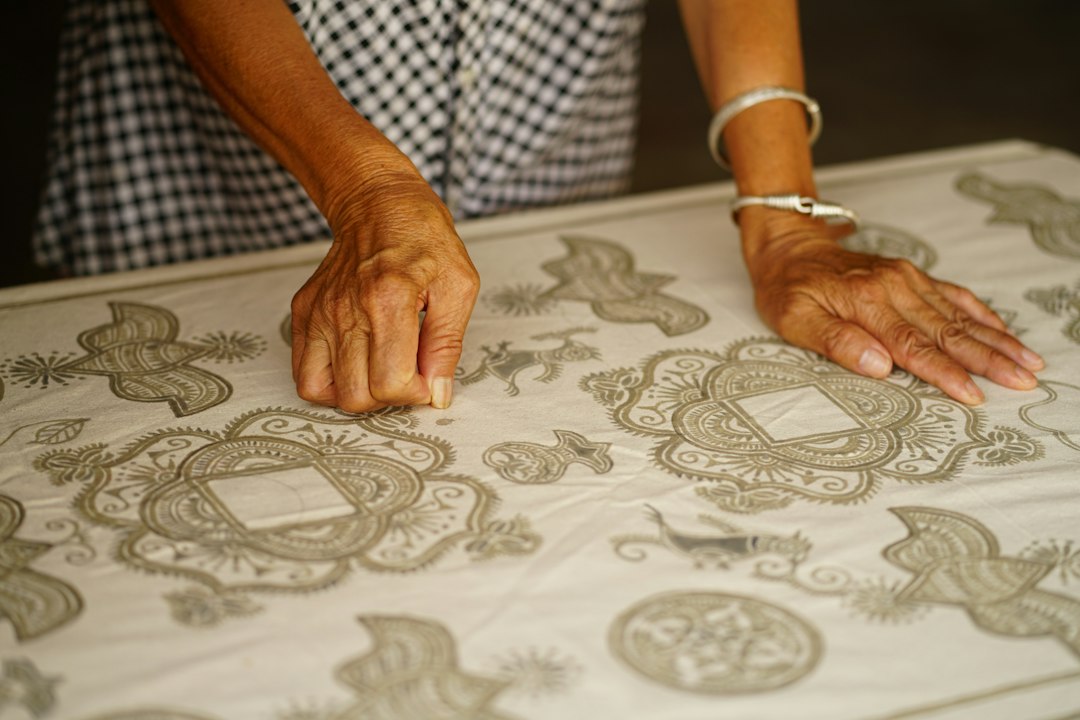
A person holding up a freshly completed block printing piece on fabric, showing the creation of Indian wooden stamps

Conclusion

Block printing at home brings a genuine piece of Indian craft tradition into your daily space. Start with 1 block, 1 color, and a flat piece of cotton. The imperfect edges and slight variations in each print are not mistakes. They are the mark of the human hand, and they are the point. Block printing rewards patience and repetition. Your 10th print will look better than your 1st, and your 50th will surprise you. Return to this craft each time you want to slow down, focus, and make something real with your hands.

Discover more about block printing

  • Ministry of Textiles – Government of India
  • Bagru Printing: A Sustainable Practice (Taylor and Francis, Textile Journal, 2025)
  • Block Printing Across India: A Journey Through Regional Traditions (Ohana Earth, 2026)

[End of deliverables]

author avatar
Sophie Renard
Sophie Renard is a French expat who moved to Bangalore in 2018 and never looked back. After years of exploring India from the backwaters of Kerala to the monasteries of Ladakh, she writes travel guides and local city content that bridges the gap between first-time visitor and seasoned explorer. Her outsider-turned-insider perspective makes India accessible to an international audience.
See Full Bio
Previous Post

Festive reset: home and wardrobe in India

Related Posts

A woman forms a sheet of cotton rag paper by hand, demonstrating the local materials used in a handmade journal practice.
Creativity

Handmade journal practice with Indian craft

04/08/2026
A woman in Maharashtra creating Warli art on brown paper using traditional white paint and a fine brush
Creativity

Warli art: techniques, tools, first projects

13/07/2026
A woman checking her terrace for cracks as part of her plan to monsoon proof her home before the June rains arrive.
Creativity

Monsoon proof your home before June rains

20/06/2026
A woman carefully creating a Madhubani painting on thick white paper with a fine-tipped brush
Creativity

Madhubani painting: a beginner’s guide

12/06/2026

Leave a Reply Cancel reply

Your email address will not be published. Required fields are marked *

Truelang AI WordPress Translation Plugin Truelang AI WordPress Translation Plugin Truelang AI WordPress Translation Plugin
No Result
View All Result

Our Focus

INDIAwebzine is your international window on India: sustainable lifestyle, business, culture, sports and events for a global audience drawn to the subcontinent's vibrant and diverse scene.

Our Readers

INDIAwebzine addresses readers who engage with India at a high level: professionally, financially, strategically, and as decision-makers in their fields.

Our Approach

Lifestyle, travel, and culture are integrated as context and indicators of economic dynamism, purchasing power, and soft power — not standalone entertainment.

Recent Posts

  • Block printing at home with Indian stamps
  • Festive reset: home and wardrobe in India

© 2025 INDIAwebzine by NOOR & NOOR.

Welcome Back!

Login to your account below

Forgotten Password? Sign Up

Create New Account!

Fill the forms bellow to register

All fields are required. Log In

Retrieve your password

Please enter your username or email address to reset your password.

Log In
Manage Consent
To provide the best experiences, we use technologies like cookies to store and/or access device information. Consenting to these technologies will allow us to process data such as browsing behavior or unique IDs on this site. Not consenting or withdrawing consent, may adversely affect certain features and functions.
Functional Always active
The technical storage or access is strictly necessary for the legitimate purpose of enabling the use of a specific service explicitly requested by the subscriber or user, or for the sole purpose of carrying out the transmission of a communication over an electronic communications network.
Preferences
The technical storage or access is necessary for the legitimate purpose of storing preferences that are not requested by the subscriber or user.
Statistics
The technical storage or access that is used exclusively for statistical purposes. The technical storage or access that is used exclusively for anonymous statistical purposes. Without a subpoena, voluntary compliance on the part of your Internet Service Provider, or additional records from a third party, information stored or retrieved for this purpose alone cannot usually be used to identify you.
Marketing
The technical storage or access is required to create user profiles to send advertising, or to track the user on a website or across several websites for similar marketing purposes.
  • Manage options
  • Manage services
  • Manage {vendor_count} vendors
  • Read more about these purposes
View preferences
  • {title}
  • {title}
  • {title}
No Result
View All Result
  • Home
    • Our Authors
    • Media Kit
    • Contact
    • Cookie Policy
    • Terms and Conditions
  • News
  • Business
  • Lifestyle
    • Gastronomy
    • Sustainable living
    • Well-being
  • Culture
  • Sports
  • Travel
  • Global India
  • Insights
  • Local Guide
    • Activities in India
    • Hotels in India
    • Nightlife in India
    • Restaurants in India
    • Services in India
    • Shopping in India

© 2025 INDIAwebzine by NOOR & NOOR.

Verified by MonsterInsights
enEnglishhiहिन्दी