


CONTACT
  • Login
  • Register
Upgrade
INDIAwebzine
Advertisement
  • Home
    • Our Authors
    • Media Kit
    • Contact
    • Cookie Policy
    • Terms and Conditions
  • News
  • Business
  • Lifestyle
    • Gastronomy
    • Sustainable living
    • Well-being
  • Culture
  • Sports
  • Travel
  • Global India
  • Insights
  • Local Guide
    • Activities in India
    • Hotels in India
    • Nightlife in India
    • Restaurants in India
    • Services in India
    • Shopping in India
  • Home
    • Our Authors
    • Media Kit
    • Contact
    • Cookie Policy
    • Terms and Conditions
  • News
  • Business
  • Lifestyle
    • Gastronomy
    • Sustainable living
    • Well-being
  • Culture
  • Sports
  • Travel
  • Global India
  • Insights
  • Local Guide
    • Activities in India
    • Hotels in India
    • Nightlife in India
    • Restaurants in India
    • Services in India
    • Shopping in India
No Result
View All Result
INDIAwebzine
No Result
View All Result
Home Business

Annual report guide for Indian investors

Every number in an Indian company's annual report tells a story, here is how to decode it before you invest.

0
A focused Indian professional woman reviewing an annual report at her desk before making her first equity investment

Annual report reading is now the most valuable skill a first-time Indian equity investor can build, as millions of new demat accounts open each year and the competition for good stocks grows sharper by the quarter.

Why the annual report matters more than ever

The National Stock Exchange of India crossed a milestone with total unique investor accounts surpassing 24 crore. Behind that number are millions of first-time buyers who pick stocks based on news headlines or social media tips. They often skip the one document that every listed company must legally produce.

Your Local Guide to India Your Local Guide to India Your Local Guide to India

Every year, thousands of Indian companies publish annual reports that run anywhere from 150 to 300 pages. That length puts most new investors off. But you do not need to read every word. You need to know which sections carry real signal and which are routine compliance text.

Public companies in India must comply with SEBI’s Listing Obligations and Disclosure Requirements (LODR) Regulations, 2015. These mandate inclusion of sections such as a Management Discussion and Analysis (MD&A) and a Corporate Governance Report in every listed company’s annual report. That structure is your map.

Where to start: the sections that reveal character

Most investors open the annual report at the financials. Experienced investors start at the chairman’s letter and the MD&A instead. The chairman’s letter offers insights into the company’s performance over the past year, challenges faced, future prospects, and the current operating environment.

The corporate overview section provides a picture of the company’s business model, its products or services, and its market position. Start with this section to understand the basics of the business. If the business model is unclear, other sections of the report will be difficult to interpret.

After the overview, move to the MD&A. This section is where management explains results in their own words. Compare what they say against the numbers in the financials. A gap between narrative and data is a warning you cannot afford to ignore.

Reading the financials: 3 numbers that matter most

Remember to look at consolidated and not standalone performance. Consolidated performance includes the results of all subsidiaries, joint ventures, and investments in associate companies. Standalone numbers can hide losses sitting inside group entities.

Compare profit to actual operating cash flow. A company can show a healthy profit and still generate very little real cash, if that profit is sitting in receivables rather than in the bank. This gap is one of the most common traps for new equity investors in India.

The balance sheet gives you the company’s debt-to-equity ratio. A high debt-to-equity ratio (normally above 1) suggests that the company has been aggressive in financing its growth through debt. If the company’s operations are under stress and its balance sheet is debt-burdened, it is better to stay away from its stock.
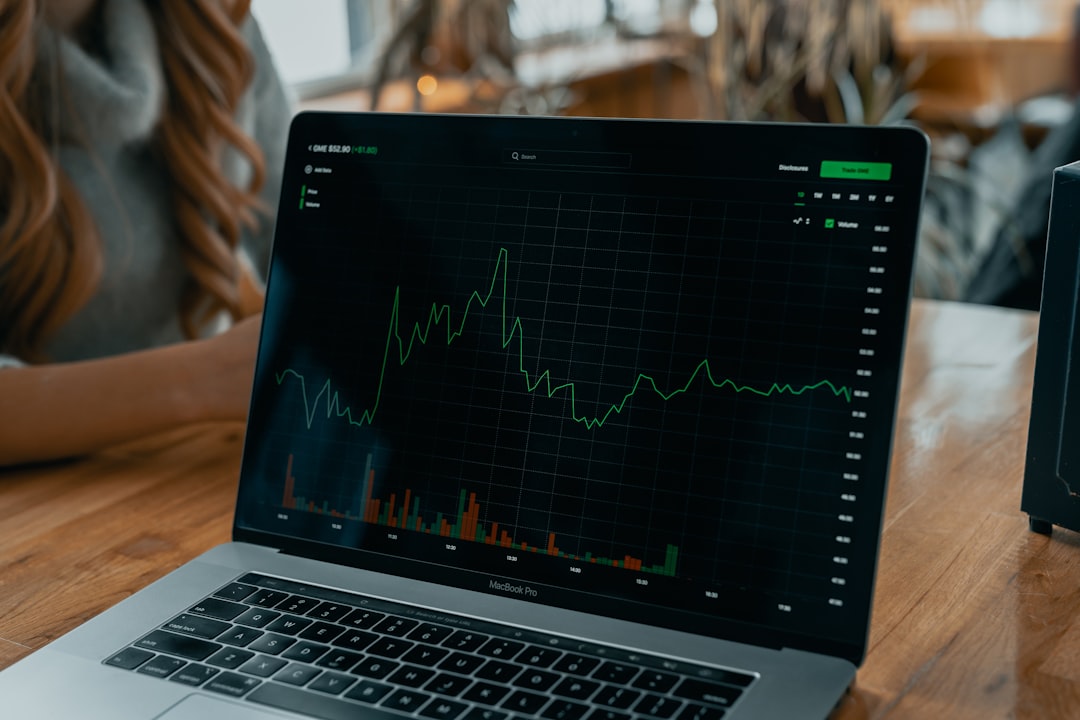

A young Indian investor analysing an annual report on a laptop screen to evaluate equity options

Expert perspective on reading governance signals

Reading an annual report well means reading it as a whole document, not as isolated tables of numbers. The corporate governance section reveals how a board actually functions: who sits on audit committees, how often they meet, and whether independent directors are genuinely independent or just familiar names. In India, related-party transactions deserve special attention. These transactions can quietly transfer value away from minority shareholders toward promoter-controlled entities. Always cross-check the notes to accounts for loans given to group companies or guarantees extended on their behalf. The auditor’s report is the most underread section in any annual report, and it is often the most important. A qualified opinion or an emphasis-of-matter paragraph tells you the auditor found something significant enough to flag. That signal alone can save a new investor from a costly mistake. A clean set of numbers with a troubled governance structure is not a safe investment.

Industry perspective, investment and capital markets professionals in India

The disclosure section: what SEBI requires companies to tell you

By law, listed companies in India must describe their risk management framework in the Board’s Report and confirm the effectiveness of internal financial controls. The Companies Act and SEBI require additional disclosures such as particulars of loans and guarantees, related-party transactions, corporate social responsibility activities and spending, and any frauds reported by auditors.

Look at how debt has moved year over year, not just where it stands today. Check whether reserves are growing mainly from retained profit, or from something else like a one-time asset revaluation. These details sit in the notes to accounts, a section most retail investors skip entirely.

-

A young Indian woman checks the IPO market on her smartphone during monsoon season in India

August IPO window reshaping retail habits

01/08/2026
A focused Indian woman reviewing her sovereign gold bonds portfolio on a laptop at her office desk

Sovereign gold bonds: how they work

12/07/2026
A young entrepreneur works in a co-working space, representing the rise of startup funding in India's tier-2 cities

Startup funding shifts to India’s tier-2 cities

09/07/2026
A young Indian woman founder speaks in a conference about building her D2C brand from home in India

D2C brand India: build yours from scratch

23/06/2026
A young Indian woman checks her index funds portfolio on a smartphone at a modern desk

Index funds for first-time investors

11/06/2026
Indian street vendor accepting UPI digital payment via QR code scan representing India's fintech revolution in 2026

India Digital Payments: Fintech Revolution Guide

02/06/2026

Every listed company maintains an Investor Relations section on its website. This is often the best source because companies upload clean, well-formatted versions of their annual reports there. You can also access filings through BSE and NSE portals at no cost.

A small team of Indian entrepreneurs discussing sections of an annual report to guide their equity investment decisions

Building your reading habit before you invest

Start with 1 company you already understand as a customer or employee. Read its last 2 annual reports side by side. Look for consistency in what management promises versus what it delivers. A pattern of missed guidance is as informative as a pattern of strong results.

Growth in sales and profit over the last 4 to 6 quarters will help you understand a company’s performance in light of the recent market scenario. Its growth rate over 4 to 5 years will give insight into the pace of growth in the past. Use those numbers to test whether the story in the MD&A holds up.

Apart from individual financial statements, investors can compute and analyse financial ratios to assess a company’s financial performance and position. These ratios include profitability ratios, liquidity ratios, solvency ratios, and efficiency ratios. Assessing these ratios against industry benchmarks and historical performance can guide understanding of a company’s competitive position and financial health.

Conclusion: the annual report is your edge

The annual report is the single richest source of verified, legally mandated information about any listed Indian company. Every equity investor who reads it carefully holds an advantage over the majority who do not. Start with the MD&A, check the auditor’s opinion, trace cash flow against reported profit, and study governance disclosures with the same attention you give to revenue figures. The annual report will not guarantee a perfect pick, but it will protect you from the most avoidable mistakes. Make reading the annual report your first step before every investment decision.

Discover more about annual report

  • SEBI Annual Report Rules 2021, Official Regulatory Framework
  • How to Read an Annual Report: A Complete Guide for Indian Investors, Margin of Safety
  • How to Read an Annual Report, Zerodha Varsity

author avatar
Ananya Krishnan
Ananya Krishnan grew up in Jaipur and has spent the last decade writing about India's vibrant lifestyle scene. From Ayurvedic wellness traditions to contemporary street fashion in Mumbai's emerging neighbourhoods, she covers Indian life with warmth and cultural pride. She is passionate about showing the world that modern India and ancient tradition can coexist beautifully.
See Full Bio
Previous Post

Science experiments kids can do at home

Next Post

Gluten-free flours for Indian baking

Related Posts

A young Indian woman checks the IPO market on her smartphone during monsoon season in India
Business

August IPO window reshaping retail habits

01/08/2026
A focused Indian woman reviewing her sovereign gold bonds portfolio on a laptop at her office desk
Business

Sovereign gold bonds: how they work

12/07/2026
A young entrepreneur works in a co-working space, representing the rise of startup funding in India's tier-2 cities
Business

Startup funding shifts to India’s tier-2 cities

09/07/2026
A young Indian woman founder speaks in a conference about building her D2C brand from home in India
Business

D2C brand India: build yours from scratch

23/06/2026
A young Indian woman checks her index funds portfolio on a smartphone at a modern desk
Business

Index funds for first-time investors

11/06/2026
Next Post
A woman in an Indian kitchen measuring gluten-free flours to prepare homemade flatbread

Gluten-free flours for Indian baking

Leave a Reply Cancel reply

Your email address will not be published. Required fields are marked *

Truelang AI WordPress Translation Plugin Truelang AI WordPress Translation Plugin Truelang AI WordPress Translation Plugin
No Result
View All Result

Our Focus

INDIAwebzine is your international window on India: sustainable lifestyle, business, culture, sports and events for a global audience drawn to the subcontinent's vibrant and diverse scene.

Our Readers

INDIAwebzine addresses readers who engage with India at a high level: professionally, financially, strategically, and as decision-makers in their fields.

Our Approach

Lifestyle, travel, and culture are integrated as context and indicators of economic dynamism, purchasing power, and soft power — not standalone entertainment.

Recent Posts

  • Monsoon outfits that dry fast and look great
  • Small-space storage fixes for Indian homes

© 2025 INDIAwebzine by NOOR & NOOR.

Welcome Back!

Login to your account below

Forgotten Password? Sign Up

Create New Account!

Fill the forms bellow to register

All fields are required. Log In

Retrieve your password

Please enter your username or email address to reset your password.

Log In
Manage Consent
To provide the best experiences, we use technologies like cookies to store and/or access device information. Consenting to these technologies will allow us to process data such as browsing behavior or unique IDs on this site. Not consenting or withdrawing consent, may adversely affect certain features and functions.
Functional Always active
The technical storage or access is strictly necessary for the legitimate purpose of enabling the use of a specific service explicitly requested by the subscriber or user, or for the sole purpose of carrying out the transmission of a communication over an electronic communications network.
Preferences
The technical storage or access is necessary for the legitimate purpose of storing preferences that are not requested by the subscriber or user.
Statistics
The technical storage or access that is used exclusively for statistical purposes. The technical storage or access that is used exclusively for anonymous statistical purposes. Without a subpoena, voluntary compliance on the part of your Internet Service Provider, or additional records from a third party, information stored or retrieved for this purpose alone cannot usually be used to identify you.
Marketing
The technical storage or access is required to create user profiles to send advertising, or to track the user on a website or across several websites for similar marketing purposes.
  • Manage options
  • Manage services
  • Manage {vendor_count} vendors
  • Read more about these purposes
View preferences
  • {title}
  • {title}
  • {title}
No Result
View All Result
  • Home
    • Our Authors
    • Media Kit
    • Contact
    • Cookie Policy
    • Terms and Conditions
  • News
  • Business
  • Lifestyle
    • Gastronomy
    • Sustainable living
    • Well-being
  • Culture
  • Sports
  • Travel
  • Global India
  • Insights
  • Local Guide
    • Activities in India
    • Hotels in India
    • Nightlife in India
    • Restaurants in India
    • Services in India
    • Shopping in India

© 2025 INDIAwebzine by NOOR & NOOR.

Verified by MonsterInsights
enEnglishfrFrançaishiहिन्दी