
Navratri celebrations light up October across the world, and the first time you see a thousand people spinning in embroidered chaniya-cholis under a floodlit sky, you understand instantly why this nine-night festival travels so well.
What Navratri actually is
Navratri means “nine nights,” a festival dedicated to Goddess Durga and her nine forms. It blends spiritual devotion, cultural celebration, fasting, music, and dance, and it honours Goddess Durga as the primal source of power and divine strength. For a newcomer, that description does not fully prepare you for what the nights actually feel like.
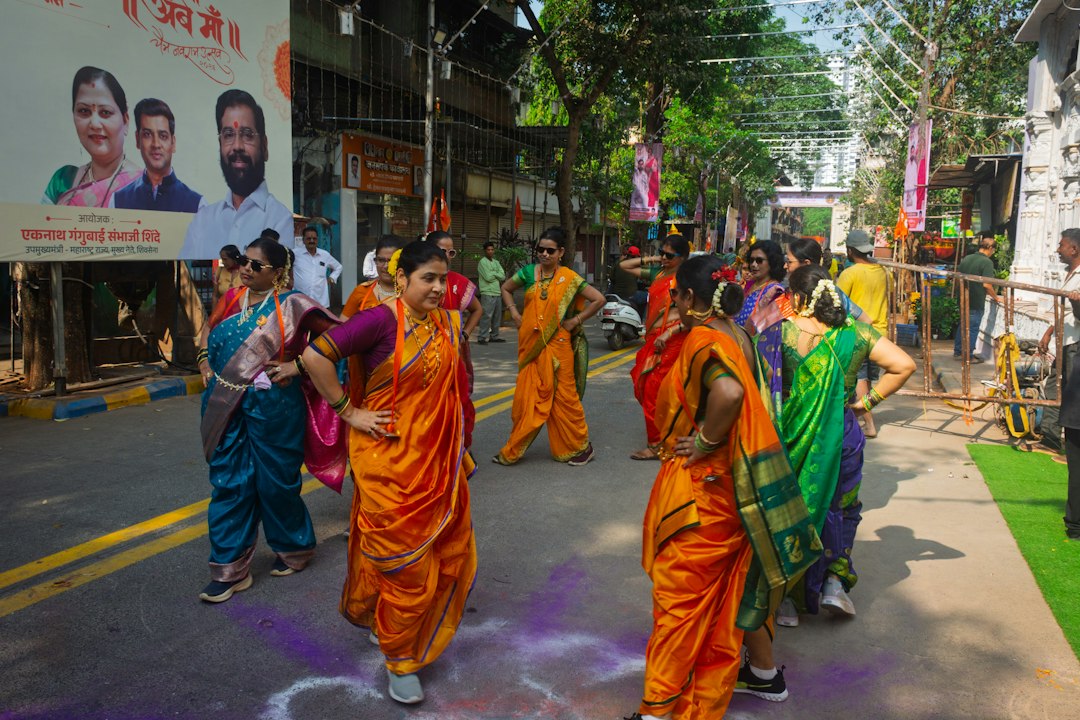
Each of the 9 days is associated with a different form of the Goddess, and devotees perform special prayers, pujas, and rituals to seek her blessings for prosperity, courage, and peace. Women, men, and children dress up in their finest, perform puja, sing bhajans and kirtans, and dance Garba and Dandiya Raas. The atmosphere is festive and inclusive. First-time visitors are always welcome.
Sharad Navratri 2026 begins on Sunday, 11 October, and continues for 9 nights through Navami. The festival concludes with Vijayadashami, the “triumphant tenth day,” reminding all devotees to persist through life’s challenges with the strength and grace of the Divine Mother.
Navratri celebrations inside India
India does not celebrate Navratri in one single way. The country celebrates it in at least 3 distinct and vivid styles at the same time. The most spectacular celebration is in Gujarat, where millions gather nightly for Garba, a circular folk dance around an image of the goddess, and Dandiya Raas, a paired stick dance. Major events are held in Ahmedabad, at Vadodara’s United Way Garba and Navlakhi Ground, and at Surat’s Sarsana Convention Centre.
In West Bengal and among Bengali communities worldwide, Navratri is observed as Durga Puja, the grandest Hindu festival of the year. Elaborate clay idols of Goddess Durga are installed in community pandals, and the festival ends on Vijayadashami when idols are immersed in rivers. The ritual of visarjan, that farewell immersion, stops traffic and draws enormous crowds.

Across North India, theatrical re-enactments of the Ramayana, called Ram Leela, build through 9 nights to the climax on Dussehra, when giant effigies of Ravana, Meghnad, and Kumbhakarna are set alight, representing the destruction of evil. Each regional form is complete in itself. Together, they show the full range of how devotion takes shape.
Navratri celebrations across the diaspora
Navratri has long been celebrated by Gujarati diaspora communities across the UK, US, Canada, Africa, and other regions. For communities across the USA, UK, Canada, Australia, Germany, the Gulf states, Singapore, and Malaysia, the festival means Garba and Dandiya nights, community pujas, and a cultural anchor for younger generations.
In the UK, the Navratri scene centres around community halls and temple grounds where Garba nights run all week. Events in Leicester, London, and Manchester are dressy affairs with professional DJs and live artists. In the USA, Canada, and Australia, local temple Navratri pujas, Garba, and Dandiya events often take place over the closest weekends to accommodate working community members.
In East and South Africa, you will find East African items alongside Gujarati plates. That fusion is less visible in North American or UK Navratri nights, where recent immigrant menus tend to echo Gujarat more directly. Community organisers across Edison, Wembley, Brampton, Parramatta, Frankfurt, Dubai, and Singapore are all planning events this year. South America hosts smaller but growing Indian communities, particularly in Suriname and Guyana, where temple-based devotion forms the heart of the festival.
Expert perspective on Navratri celebrations worldwide
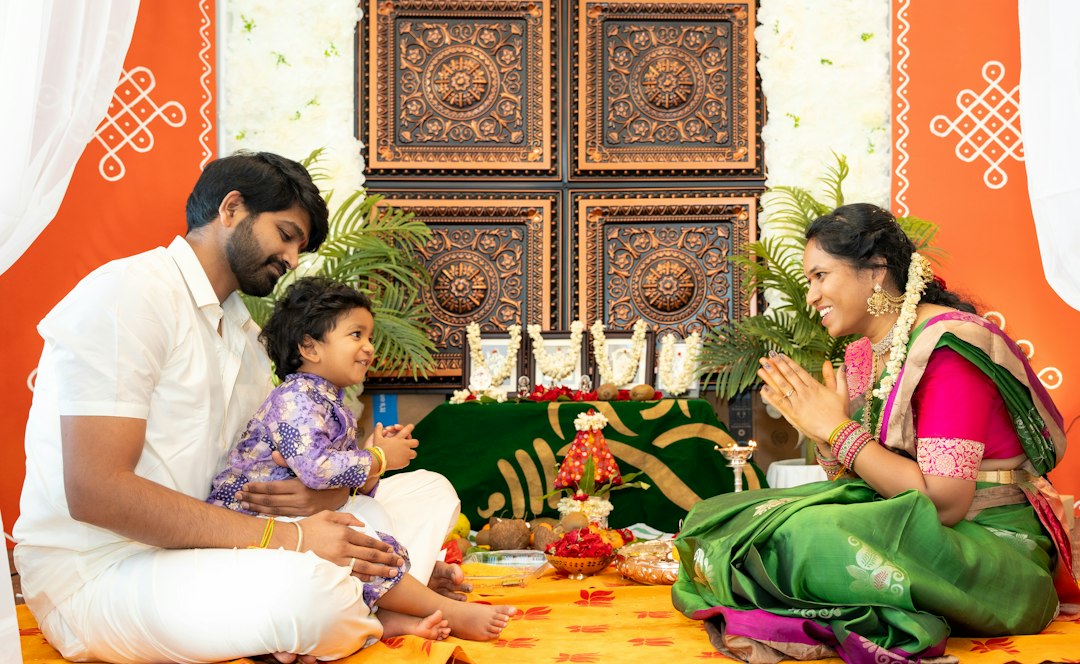
Navratri celebrations are now genuinely global, and what is remarkable is how each community adapts the festival without losing its core. In Leicester or London, you have community halls transformed into sacred spaces with decorative lighting, live classical musicians, and fasting food stalls serving sabudana dishes at midnight. In Dubai and Singapore, the Indian professional community books large hotel ballrooms and outdoor grounds. The spiritual intention stays the same everywhere: 9 nights of collective devotion to the feminine divine. What changes is the setting and the accent of the music. For young people in the diaspora, Navratri is often the festival that reconnects them to their heritage most powerfully, because it is social, sensory, and participative. You do not just watch it. You are in it.
Industry perspective, Hindu diaspora cultural and religious organisations
Garba: the dance at the centre of it all
Garba is a ritualistic and devotional dance performed on the occasion of Navaratri, dedicated to the worship of the feminine energy or Shakti. Central to each gathering is the garbha deep, a clay pot holding a glowing lamp that represents life itself. Dancers move in rhythmic circles around the flame, hands clapping and feet striking the ground in unison.





In December 2023, UNESCO recognised Garba as part of the world’s Intangible Cultural Heritage, highlighting its cultural significance. Over the decades, Garba has been an integral and living component of Gujarati culture in India and among the global Indian diaspora. In addition to being a religious ritual, Garba fosters social equality by reducing socio-economic, gender, and rigid social structures.
Over time, Garba has incorporated modern music and spread globally, especially through the Gujarati diaspora. Today you can join a Garba night in Sydney, São Paulo, or Johannesburg, and the circular movement will feel familiar everywhere.

Practical tips for joining Navratri celebrations
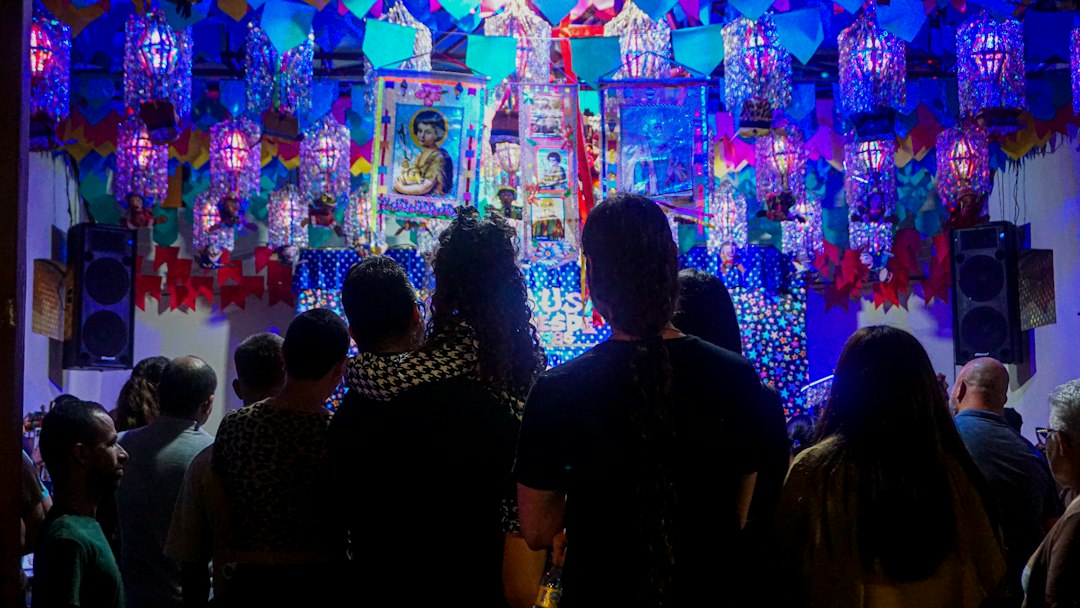
Attending for the first time feels exciting but also a little uncertain. A few practical points help a great deal. Dress modestly and, if possible, in traditional Indian clothing. Most venues sell or rent chaniya-cholis and kurtas near the entrance. Bring cash for food stalls, because the fasting dishes sold at Navratri events are some of the most delicious snacks you will find anywhere.
Many professionals in the diaspora fast on Days 1, 8, and 9, which are considered spiritually most powerful, and eat normally on other days. If you are not Hindu, no one expects you to fast. Your presence and respectful participation are enough. If you are in Dubai, London, Toronto, or Sydney, note that following Indian Standard Time for rituals without converting can mean you perform them at completely wrong hours. Ask your local temple for correct local timings.
Finally, arrive early. The best Garba circles form quickly, and the energy builds fast. By the second night, you will know the basic steps.
Navratri celebrations: a festival that belongs to the world
Navratri remains one of the most significant festivals in the Hindu calendar because it speaks to universal themes: the victory of good over evil, inner strength, devotion to the divine, and the celebration of life’s rhythms. Navratri celebrations do not require you to be Indian or Hindu to feel their pull. The music, the colour, and the movement create something open and generous.
This October, Navratri celebrations connect millions of people across 6 continents from 11 to 19 October 2026. Find your nearest community event, put on something colourful, and step into the circle. It is a far better way to understand India than any guidebook.