

CONTACT
  • Login
  • Register
Upgrade
INDIAwebzine
Advertisement
  • Home
    • Our Authors
    • Media Kit
    • Contact
    • Cookie Policy
    • Terms and Conditions
  • News
  • Business
  • Lifestyle
    • Gastronomy
    • Sustainable living
    • Well-being
  • Culture
  • Sports
  • Travel
  • Global India
  • Insights
  • Local Guide
    • Activities in India
    • Hotels in India
    • Nightlife in India
    • Restaurants in India
    • Services in India
    • Shopping in India
  • Home
    • Our Authors
    • Media Kit
    • Contact
    • Cookie Policy
    • Terms and Conditions
  • News
  • Business
  • Lifestyle
    • Gastronomy
    • Sustainable living
    • Well-being
  • Culture
  • Sports
  • Travel
  • Global India
  • Insights
  • Local Guide
    • Activities in India
    • Hotels in India
    • Nightlife in India
    • Restaurants in India
    • Services in India
    • Shopping in India
No Result
View All Result
INDIAwebzine
No Result
View All Result
Home Luxury Lifestyle Sustainable living

Food waste tips for India’s festive season

Smart, tradition-friendly habits that help Indian households cut food waste before the festivities even begin.

0
An Indian woman writing a meal plan at her kitchen table, working to reduce food waste before the festive season begins.

Food waste is one of modern India’s most quietly urgent problems, and the weeks before our festive season are when every household can choose to do something genuinely meaningful about it.

Why the pre-season is the most important moment

The festive calendar in India runs from roughly August through January. Families begin buying, cooking, and gifting food weeks before the main celebrations arrive. During the festive season, household waste rises sharply as families over-prepare for guests, overbuy perishable ingredients, and discard leftovers from elaborate celebrations.

Your Local Guide to India Your Local Guide to India Your Local Guide to India

According to the UN Food Waste Index Report 2024, Indian households alone waste an average of 55 kg of food per person every year, producing a national total of approximately 78.2 million tonnes annually. That number is staggering when you place it next to the reality of hunger in the same country. Around 12% of India’s population remains undernourished, which is approximately 170 to 175 million people.

The good news is that the pre-season, the weeks of shopping, preparing, and stocking up, is the easiest time to change behaviour. You do not need to shorten your menu or simplify your recipes. You need smarter habits around 4 areas: planning, storage, portions, and leftovers.

Smart planning cuts food waste before it starts

When you have a clear idea of your food requirements, you can shop accordingly. Avoid purchases that are not on your list. This simple practice can reduce the amount of food that goes unused and ends up discarded.

Start with a written guest list and a realistic meal plan 2 weeks before your first celebration. Count the number of people, note dietary needs, and write every dish and quantity you need. Then buy exactly that, with a 10% buffer for unexpected guests. Consider buying in smaller quantities. Buying in bulk may appear cost-effective, but it leads to food waste if you cannot consume items before they expire.

Additionally, choose fresh, seasonal produce from nearby markets. It is often tastier and it reduces the distance your food travels before reaching your kitchen. Supporting local vendors also keeps money inside the community, which feels as generous as any festive gift.

Proper storage protects your ingredients and your budget

Effective food storage is the key to extending the freshness of your groceries. Inadequate storage leads directly to premature spoilage and food waste.

Use airtight containers for every dry ingredient from the moment you open a packet. Label containers with the purchase date. Place newer purchases at the back of your shelf and older items at the front. This first-in, first-out method stops perfectly good ghee, atta, or mukhwas from sitting forgotten behind newer packets.

For fresh produce like coriander, curry leaves, and green chillies, store them in damp cloth or paper inside the refrigerator. Milk-based sweets like kheer or rabri need to stay cold and must be consumed within 2 days. Dry sweets like laddoos and barfi stay fresh for 5 to 7 days in airtight boxes placed away from moisture and heat.

An Indian family serving small portions of festive dishes together, practising mindful food waste reduction.

Portion control keeps the table full without excess

During celebrations, serve small portions first. A common problem is that guests fill their plates out of enthusiasm and cannot finish everything they take.

Serve food in stages. Bring out 1 or 2 dishes at a time and refill plates on request. This is not only more mindful, it is also a warmer way to host. Guests get to taste everything fresh, and you cook or reheat only what is actually needed. Responsible habits like portion control and the reuse of leftovers reduce waste significantly at the household level.

Think also about the size of your serving vessels. Large platters encourage large portions. Smaller, beautiful katori sets keep portions natural and allow every item on your menu to stay visible throughout the meal.

Expert perspective on food waste and Indian festivals

Indian festivals carry within them a deep philosophical idea of abundance, but abundance was never meant to mean excess. Our tradition of *annadaan*, giving food as charity, exists precisely because our ancestors understood that food is sacred and must not be wasted. When we cook more than our guests can eat, we are not being generous. We are being careless with a gift. The smartest modern approach is to plan with the same care our grandmothers used, know your quantities, use every ingredient fully, and when there is surplus, share it with intention rather than discard it by default. Composting kitchen scraps and donating clean surplus food to a local shelter or food bank is entirely consistent with the spirit of every Indian festival. This is not minimalism. This is *seva*.

Industry perspective, sustainability and food systems professionals in India

-

A woman draping a handloom saree at home as part of her festive reset before the celebration season in India

Festive reset: home and wardrobe in India

18/09/2026
A woman in an Indian kitchen assembling a zero-chemical cleaning kit with lemon, baking soda, and vinegar on the counter

Zero-chemical cleaning kit for Indian homes

05/09/2026
A skilled woman artisan weaving handwoven silk sarees on a traditional loom in India

Silk sarees: India’s 5 great weaving traditions

19/08/2026
A woman wearing a breathable handloom kurta at an Indian festive gathering, showcasing festive fashion.

Festive fashion tips for humid August days

18/08/2026
An Indian woman carrying a reusable cotton bag at a local vegetable market, embracing zero waste shopping habits.

Zero waste swaps for Indian households

07/08/2026
A young Indian woman in a flowy kurta walking confidently, showcasing practical and stylish monsoon outfits

Monsoon outfits that dry fast and look great

03/08/2026

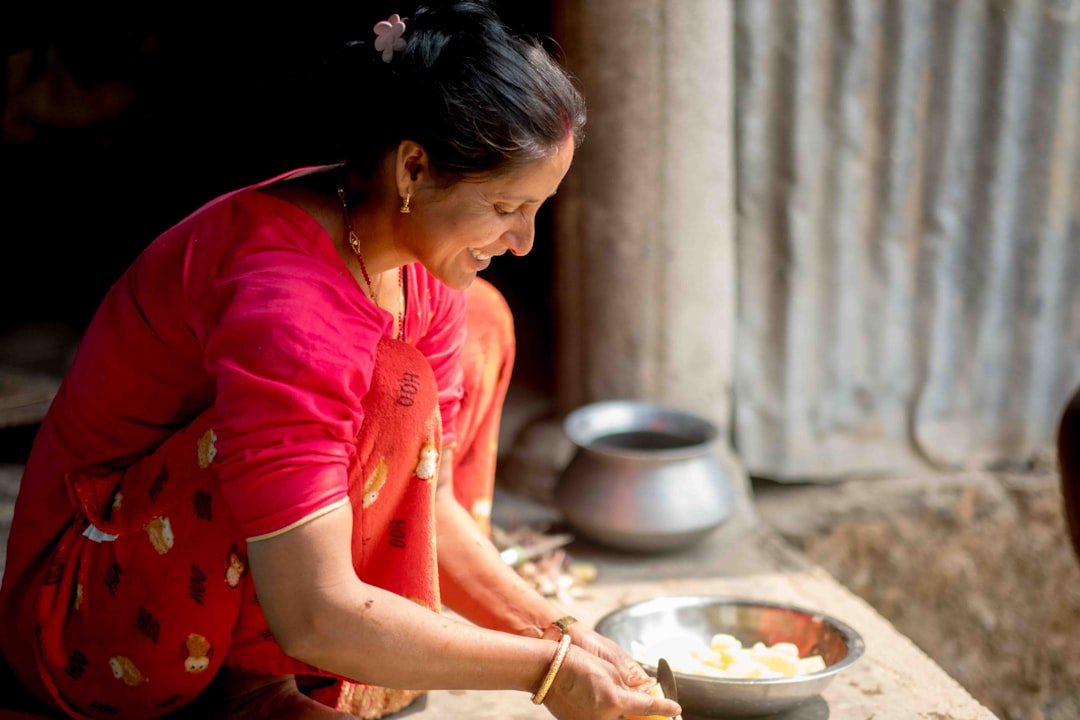
A young Indian woman in her kitchen repurposing festive leftovers as part of her household food waste reduction routine.

Giving leftovers a second life

Indian cuisine is incredibly diverse, and many dishes can be repurposed into new meals. Leftover rotis become parathas or layer a quick vegetable sandwich. Overcooked rice becomes flavourful pulao or a stir-fried rice dish.

Another approach is zero-waste cooking, which means using every part of an ingredient including peels, stems, and roots. Potato peels, for example, can be seasoned and baked into crispy snacks, and vegetable scraps build a rich broth.

For sweet leftovers, stale laddoos crumble beautifully into a warm halwa. Leftover rice kheer thickens overnight and works as a filling for crepes or pancakes the next morning. These are not compromises. They are the kind of practical kitchen creativity that our grandmothers practised without giving it a name.

Conclusion: food waste reduction is a festive act in itself

The cultural and religious traditions behind Indian festivals actually emphasise sharing, community care, and mindful consumption. Reducing food waste does not diminish your celebrations. It deepens them.

Start with 1 change this pre-season: write your meal plan before you shop. Then add better storage habits, smaller first servings, and a plan for every leftover. Food waste reduction is not a sacrifice. It is a way of honouring the food on your table and the people who do not yet have enough on theirs. Share this approach with your family, try it this festive season, and make it your household’s new tradition.

Discover more about food waste

  • Eat Right India: Safe, Healthy and Sustainable Food for All (FSSAI, Government of India)
  • Household food waste behaviour in Delhi, India: Insights from a mixed methods study (ScienceDirect, 2025)
  • India’s Food Waste Paradox: Causes, data and policy context (Next IAS, April 2026)

[End of deliverables]

author avatar
Arjun Mehta
Arjun Mehta is a Mumbai-based journalist with a background in economics from IIM Ahmedabad. He writes about India's startup ecosystem, foreign investment landscape, and the country's rapid digital transformation. His work blends sharp market analysis with real stories from entrepreneurs building India's next chapter.
See Full Bio
Previous Post

Coastal cuisine: India’s most underrated seafood

Next Post

Trademark registration in India: your guide

Related Posts

A woman draping a handloom saree at home as part of her festive reset before the celebration season in India
Sustainable living

Festive reset: home and wardrobe in India

18/09/2026
A woman in an Indian kitchen assembling a zero-chemical cleaning kit with lemon, baking soda, and vinegar on the counter
Sustainable living

Zero-chemical cleaning kit for Indian homes

05/09/2026
A skilled woman artisan weaving handwoven silk sarees on a traditional loom in India
Sustainable living

Silk sarees: India’s 5 great weaving traditions

19/08/2026
A woman wearing a breathable handloom kurta at an Indian festive gathering, showcasing festive fashion.
Sustainable living

Festive fashion tips for humid August days

18/08/2026
An Indian woman carrying a reusable cotton bag at a local vegetable market, embracing zero waste shopping habits.
Sustainable living

Zero waste swaps for Indian households

07/08/2026
Next Post
A young Indian woman entrepreneur completing her trademark registration application at a desk in a modern Mumbai office

Trademark registration in India: your guide

Leave a Reply Cancel reply

Your email address will not be published. Required fields are marked *

Truelang AI WordPress Translation Plugin Truelang AI WordPress Translation Plugin Truelang AI WordPress Translation Plugin
No Result
View All Result

Our Focus

INDIAwebzine is your international window on India: sustainable lifestyle, business, culture, sports and events for a global audience drawn to the subcontinent's vibrant and diverse scene.

Our Readers

INDIAwebzine addresses readers who engage with India at a high level: professionally, financially, strategically, and as decision-makers in their fields.

Our Approach

Lifestyle, travel, and culture are integrated as context and indicators of economic dynamism, purchasing power, and soft power — not standalone entertainment.

Recent Posts

  • Block printing at home with Indian stamps
  • Festive reset: home and wardrobe in India

© 2025 INDIAwebzine by NOOR & NOOR.

Welcome Back!

Login to your account below

Forgotten Password? Sign Up

Create New Account!

Fill the forms bellow to register

All fields are required. Log In

Retrieve your password

Please enter your username or email address to reset your password.

Log In
Manage Consent
To provide the best experiences, we use technologies like cookies to store and/or access device information. Consenting to these technologies will allow us to process data such as browsing behavior or unique IDs on this site. Not consenting or withdrawing consent, may adversely affect certain features and functions.
Functional Always active
The technical storage or access is strictly necessary for the legitimate purpose of enabling the use of a specific service explicitly requested by the subscriber or user, or for the sole purpose of carrying out the transmission of a communication over an electronic communications network.
Preferences
The technical storage or access is necessary for the legitimate purpose of storing preferences that are not requested by the subscriber or user.
Statistics
The technical storage or access that is used exclusively for statistical purposes. The technical storage or access that is used exclusively for anonymous statistical purposes. Without a subpoena, voluntary compliance on the part of your Internet Service Provider, or additional records from a third party, information stored or retrieved for this purpose alone cannot usually be used to identify you.
Marketing
The technical storage or access is required to create user profiles to send advertising, or to track the user on a website or across several websites for similar marketing purposes.
  • Manage options
  • Manage services
  • Manage {vendor_count} vendors
  • Read more about these purposes
View preferences
  • {title}
  • {title}
  • {title}
No Result
View All Result
  • Home
    • Our Authors
    • Media Kit
    • Contact
    • Cookie Policy
    • Terms and Conditions
  • News
  • Business
  • Lifestyle
    • Gastronomy
    • Sustainable living
    • Well-being
  • Culture
  • Sports
  • Travel
  • Global India
  • Insights
  • Local Guide
    • Activities in India
    • Hotels in India
    • Nightlife in India
    • Restaurants in India
    • Services in India
    • Shopping in India

© 2025 INDIAwebzine by NOOR & NOOR.

Verified by MonsterInsights
enEnglishhiहिन्दी