
CONTACT
  • Login
  • Register
Upgrade
INDIAwebzine
Advertisement
  • Home
    • Our Authors
    • Media Kit
    • Contact
    • Cookie Policy
    • Terms and Conditions
  • News
  • Business
  • Lifestyle
    • Gastronomy
    • Sustainable living
    • Well-being
  • Culture
  • Sports
  • Travel
  • Global India
  • Insights
  • Local Guide
    • Activities in India
    • Hotels in India
    • Nightlife in India
    • Restaurants in India
    • Services in India
    • Shopping in India
  • Home
    • Our Authors
    • Media Kit
    • Contact
    • Cookie Policy
    • Terms and Conditions
  • News
  • Business
  • Lifestyle
    • Gastronomy
    • Sustainable living
    • Well-being
  • Culture
  • Sports
  • Travel
  • Global India
  • Insights
  • Local Guide
    • Activities in India
    • Hotels in India
    • Nightlife in India
    • Restaurants in India
    • Services in India
    • Shopping in India
No Result
View All Result
INDIAwebzine
No Result
View All Result
Home Culture

Guru Purnima: India’s quiet celebration

Discover why millions of Indians pause on a full moon night in July to honor the teacher who changed everything.

0
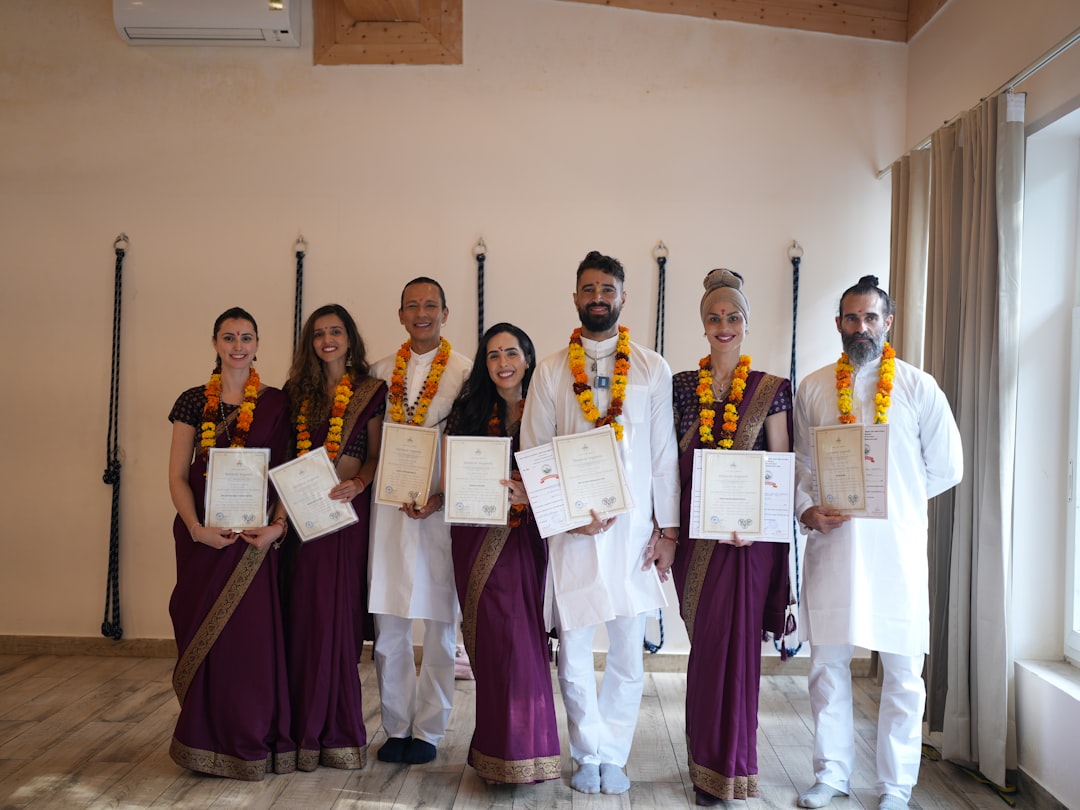
students and teachers celebrating during Guru Purnima, the Indian festival of gratitude for teachers

Guru Purnima arrives every July on a full moon night, and most visitors to India miss it entirely. No fireworks, no crowded markets, no bright lights visible from a hotel window. Yet in ashrams, temples, music schools, and family homes across the country, something genuinely moving is taking place. Millions of people stop to thank the person who changed how they see the world.

What Guru Purnima actually means

Guru Purnima is a religious festival dedicated to offering respect to spiritual and academic teachers. The name tells you almost everything. The word “guru” comes from the Sanskrit root words “gu” and “ru.” “Gu” means darkness or ignorance, and “ru” means dispeller. A guru, then, is the dispeller of darkness or ignorance.

Your Local Guide to India Your Local Guide to India Your Local Guide to India

The festival is observed in India, Nepal, and Bhutan to honor spiritual and academic teachers and mentors. It falls on a full moon day during the Hindu lunar calendar month of Ashadha, which corresponds to June or July in the Gregorian calendar. Because the date is linked to the moon, it changes each year. In 2026, it falls on 29 July.

The first time I witnessed Guru Purnima, I was sitting in a small classical music school in Varanasi. A young student placed flowers at her teacher’s feet. She said nothing. The teacher said nothing. That silence felt more powerful than anything I had seen in a week of temple visits.

The ancient stories behind the festival

In the Vedic Hindu tradition, the day is celebrated in honor of the sage Vyasa, who is seen as one of the greatest gurus in ancient Hindu traditions and a symbol of the guru-shishya tradition. It is also known as Vyasa Purnima, because it marks the birthday of Veda Vyasa, the author of the Mahabharata and compiler of the Vedas.

In Hindu mythology, the god Shiva is revered as the adi yogi, meaning the original yogi, and is also considered to be the adi guru, that is, the original teacher. Legend says that Shiva lived and meditated as a yogi in the Himalayas. Many seekers came to the mountains hoping to gain wisdom from him, but most could not understand the god’s ways. All except 7 men left. The 7 observed Shiva for months and spent decades in penance as instructed by him. Finally, on a full moon day, Shiva rewarded their dedication by sharing his sacred knowledge with them.

Guru Purnima also holds particular significance in Buddhism, as followers believe that on this day the Buddha gave his first sermon to his disciples after attaining enlightenment. He delivered the sermon at Sarnath, in present-day Uttar Pradesh, near Varanasi, to his 5 disciples. Jains observe Guru Purnima to honor Lord Mahavira, the 24th Tirthankara and key spiritual figure. Practitioners of Jainism believe that Mahavira accepted Gautama Swami as his first disciple on this day.

How the festival looks on the ground

Traditional Guru Purnima rituals are acts of deep reverence. Disciples wash the feet of their guru and collect the Charanamrit, the sacred water touched by the teacher’s feet, symbolizing purity, surrender, and gratitude. In earlier times, disciples offered dan, meaning donations, and seva, meaning service, expressing devotion through humble acts.

In Indian classical music and arts, Guru Purnima holds great significance. Students across the country honor their music or dance teachers through performances and heartfelt tributes. Indian classical dancing and music classes continue to follow the Guru Shishya Parampara, the ancient tradition of transmission from teacher to student. You can attend these performances as a visitor. Asking a school or ashram in advance is usually all it takes.

-

A monk in an ornate mask performs during Hemis Festival in the monastery courtyard in Ladakh

Hemis Festival: why Cham dances draw thousands

25/06/2026
Film industry production set showing Indian content creation and entertainment economics with camera equipment

Film Industry: India Entertainment Economics 2026

22/03/2026
Heritage tourism at Taj Mahal showing cultural site economics and visitor revenue in India

Heritage Tourism: India Cultural Economics 2026

27/02/2026

Culinary Tourism: India Food Economics 2026

25/02/2026
Cricket league match with packed stadium showing India's sports business economics and entertainment industry

Cricket League: India Sports Economics 2026

23/02/2026
Classical arts Bharatanatyam dancer in traditional costume showing India's dance revival and cultural heritage

Classical Arts: India Revival Market 2026

21/02/2026

In Ujjain and Varanasi, both considered sacred cities, Guru Purnima is celebrated with large Vyasa Puja ceremonies organized at temples and spiritual centers. Across South India, ashrams and spiritual institutions organize special pujas, satsangs, and meditation sessions. Many organizations also hold lectures and community meals to mark the occasion. These events are almost always open to respectful visitors.
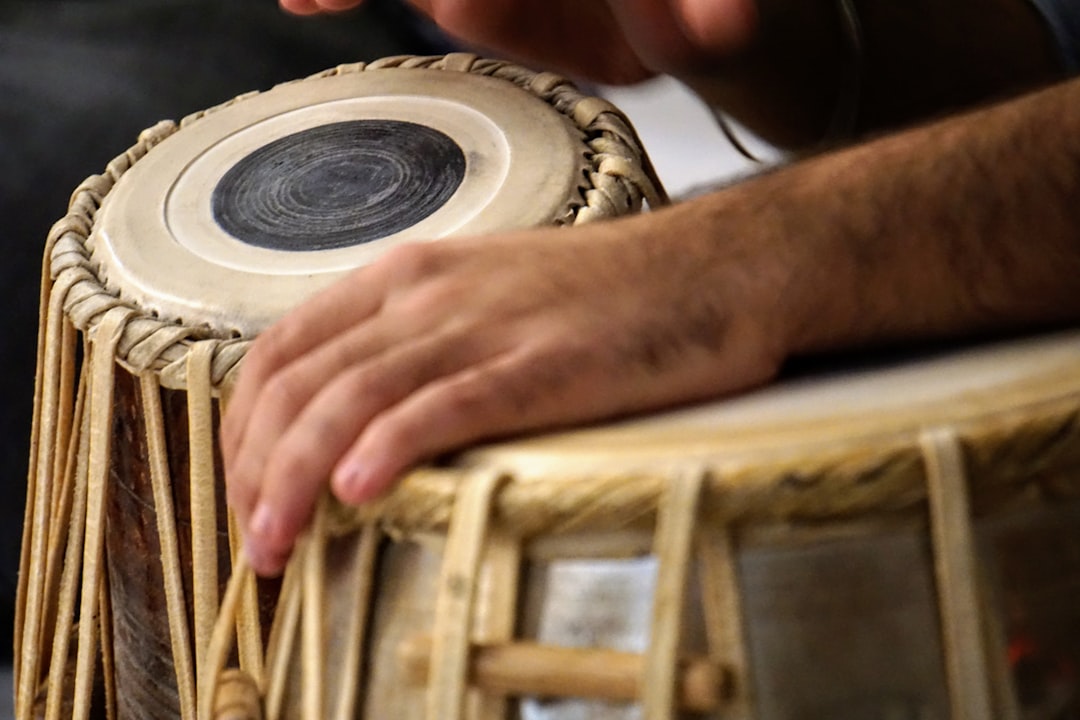
A music teacher and student sit together during a Guru Purnima tribute performance in India

A cultural perspective on Guru Purnima

Guru Purnima is not simply a day of ceremony. It carries a philosophy that places knowledge above wealth and the teacher above almost every other figure in society. In Indian tradition, the guru was seen as the highest entity because knowing was considered the highest value. The festival asks each person to pause and ask: who removed my ignorance? Who showed me the next step? That question is as relevant in a music class in Chennai as it is in a monastery in Ladakh or a primary school in Bihar. What makes Guru Purnima quietly powerful is that it does not demand spectacle. A student touching a teacher’s feet, a monk revisiting a foundational teaching, a young musician playing her first public piece in honor of her guru: all of these are Guru Purnima. The ritual form changes across regions and traditions. The feeling beneath it does not.

Industry perspective, cultural and intangible heritage professionals in India

Why Guru Purnima matters beyond religion

Guru Purnima transcends religious boundaries. While rooted in Hindu tradition, it is also celebrated by Buddhists, Jains, and others who value the teacher-student relationship. That breadth is what makes it genuinely interesting for a traveler. You do not need to belong to any faith to understand gratitude.


This tradition goes beyond religious teaching. Parents, school teachers, mentors, and guides are also honored for shaping character and awareness. In schools, colleges, and other educational institutions around the country, present and past students visit their teachers and greet them with tokens and words of gratitude and respect.

Historically, Guru Purnima also held agrarian significance in ancient India. Because the festival falls during the monsoon season, farmers would worship deities and seek blessings for good rainfall and prosperous harvests, making Guru Purnima a day of gratitude and divine grace. That connection to the monsoon gives the festival a seasonal feeling that is very specific to India. Rain is not a backdrop. Rain is part of the celebration.
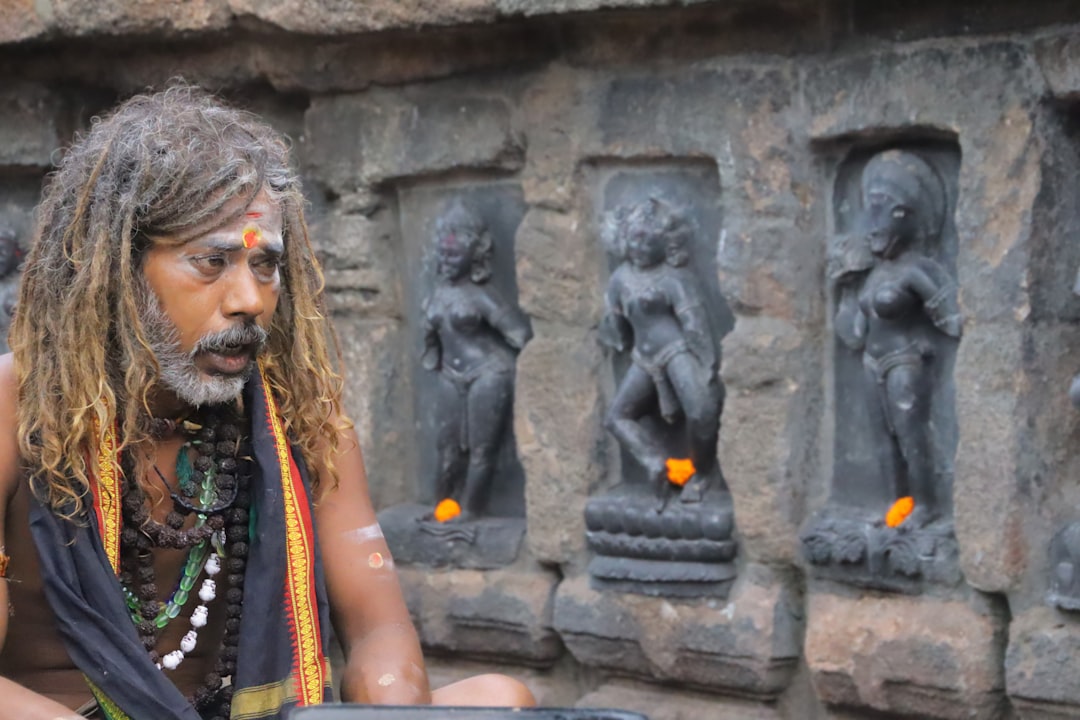
A monk participates in a candlelit Guru Purnima ceremony at a temple in India

Conclusion: why Guru Purnima stays with you

Guru Purnima is not the festival that photographs best. It is the one you feel. I have attended Diwali, Holi, and Navratri across different states. None of them left me thinking about my own teachers the way Guru Purnima did. The festival asks a simple question: who lit the path for you? Guru Purnima invites every visitor to sit with that question. Find a music school, an ashram, or a temple on this full moon night in July. Watch the ritual. You do not need to understand every word. Guru Purnima speaks clearly enough on its own.

Discover more about Guru Purnima

  • Guru Purnima, Darjeeling District, Government of West Bengal
  • Guru Purnima: Festival, Origin, Religious Traditions and Celebrations, Britannica
  • Guru Purnima 2026: Date, Puja Muhurat, Rituals and Spiritual Importance, MSN India

author avatar
Sophie Renard
Sophie Renard is a French expat who moved to Bangalore in 2018 and never looked back. After years of exploring India from the backwaters of Kerala to the monasteries of Ladakh, she writes travel guides and local city content that bridges the gap between first-time visitor and seasoned explorer. Her outsider-turned-insider perspective makes India accessible to an international audience.
See Full Bio
Previous Post

Startup funding shifts to India’s tier-2 cities

Next Post

Demographic dividend: what it means for India’s youth

Related Posts

A monk in an ornate mask performs during Hemis Festival in the monastery courtyard in Ladakh
Culture

Hemis Festival: why Cham dances draw thousands

25/06/2026
Film industry production set showing Indian content creation and entertainment economics with camera equipment
Culture

Film Industry: India Entertainment Economics 2026

22/03/2026
Heritage tourism at Taj Mahal showing cultural site economics and visitor revenue in India
Culture

Heritage Tourism: India Cultural Economics 2026

27/02/2026
Culture

Culinary Tourism: India Food Economics 2026

25/02/2026
Cricket league match with packed stadium showing India's sports business economics and entertainment industry
Culture

Cricket League: India Sports Economics 2026

23/02/2026
Next Post
A young Indian woman studies on her laptop, representing India's demographic dividend generation preparing for the future.

Demographic dividend: what it means for India's youth

Leave a Reply Cancel reply

Your email address will not be published. Required fields are marked *

Truelang AI WordPress Translation Plugin Truelang AI WordPress Translation Plugin Truelang AI WordPress Translation Plugin
No Result
View All Result

Our Focus

INDIAwebzine is your international window on India: sustainable lifestyle, business, culture, sports and events for a global audience drawn to the subcontinent's vibrant and diverse scene.

Our Readers

INDIAwebzine addresses readers who engage with India at a high level: professionally, financially, strategically, and as decision-makers in their fields.

Our Approach

Lifestyle, travel, and culture are integrated as context and indicators of economic dynamism, purchasing power, and soft power — not standalone entertainment.

Recent Posts

  • Digital labels: Indian classical music goes global
  • Monsoon dal recipes from 7 Indian states

© 2025 INDIAwebzine by NOOR & NOOR.

Welcome Back!

Login to your account below

Forgotten Password? Sign Up

Create New Account!

Fill the forms bellow to register

All fields are required. Log In

Retrieve your password

Please enter your username or email address to reset your password.

Log In
Manage Consent
To provide the best experiences, we use technologies like cookies to store and/or access device information. Consenting to these technologies will allow us to process data such as browsing behavior or unique IDs on this site. Not consenting or withdrawing consent, may adversely affect certain features and functions.
Functional Always active
The technical storage or access is strictly necessary for the legitimate purpose of enabling the use of a specific service explicitly requested by the subscriber or user, or for the sole purpose of carrying out the transmission of a communication over an electronic communications network.
Preferences
The technical storage or access is necessary for the legitimate purpose of storing preferences that are not requested by the subscriber or user.
Statistics
The technical storage or access that is used exclusively for statistical purposes. The technical storage or access that is used exclusively for anonymous statistical purposes. Without a subpoena, voluntary compliance on the part of your Internet Service Provider, or additional records from a third party, information stored or retrieved for this purpose alone cannot usually be used to identify you.
Marketing
The technical storage or access is required to create user profiles to send advertising, or to track the user on a website or across several websites for similar marketing purposes.
  • Manage options
  • Manage services
  • Manage {vendor_count} vendors
  • Read more about these purposes
View preferences
  • {title}
  • {title}
  • {title}
No Result
View All Result
  • Home
    • Our Authors
    • Media Kit
    • Contact
    • Cookie Policy
    • Terms and Conditions
  • News
  • Business
  • Lifestyle
    • Gastronomy
    • Sustainable living
    • Well-being
  • Culture
  • Sports
  • Travel
  • Global India
  • Insights
  • Local Guide
    • Activities in India
    • Hotels in India
    • Nightlife in India
    • Restaurants in India
    • Services in India
    • Shopping in India

© 2025 INDIAwebzine by NOOR & NOOR.

Verified by MonsterInsights
enEnglishfrFrançaishiहिन्दी