
Madhubani painting pulls you in the moment you see it: bold black outlines, every gap filled with color, fish and peacocks and lotus flowers pressing against the edges of the frame. Most visitors to Bihar walk past it on a train platform or a government wall and think: I could never do that. They are wrong.
What Madhubani painting actually is
Madhubani painting, also known as Mithila art, is a style of painting practiced in the Mithila region of India and Nepal. It is named after the Madhubani district of Bihar, where it originated and remains the most active center of production. The tradition dates back over 2,500 years and was originally created by women on the walls of their homes to celebrate religious festivals and auspicious occasions.

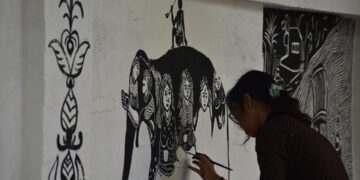
In these paintings, no space is left empty. Gaps are filled with flowers, animals, birds, and geometric designs. Double-lined contours, big eyes with shining black pupils, and a predominant use of colors like blue, green, pink, orange, and red make Madhubani paintings stand apart among Indian folk traditions.
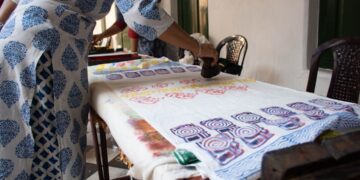
Traditionally, the painting was done on freshly plastered mud walls and floors of huts, but over the years it has moved to varied surfaces including cloths, handmade papers, and canvas. Today it is done with fingers, twigs, brushes, nib-pens, and matchsticks, using natural dyes and pigments.
The 4 styles every beginner should know
The 4 primary styles, Bharni, Katchni, Tantrik, and Godna, each tell a story through their technique, motifs, and symbolism. Knowing the difference helps you choose a starting point.
Bharni, derived from the Hindi word “bharna” (to fill), is characterized by its vibrant, filled-in motifs. This style is ideal for beginners because outlines are drawn and spaces are filled with bold, flat colors. Katchni is a style in which lines are more dominant than colors. Tantrik style uses spiritual and symbolic patterns, while Godna takes its shapes from traditional tattoo designs.
Most beginners start with Bharni. Common themes include nature, deities, and daily life, often depicted with double-lined borders. Start by practicing simple shapes like fish, birds, or flowers, then fill them with solid colors using brushes or fabric scraps dipped in paint.

The tools and colors you need
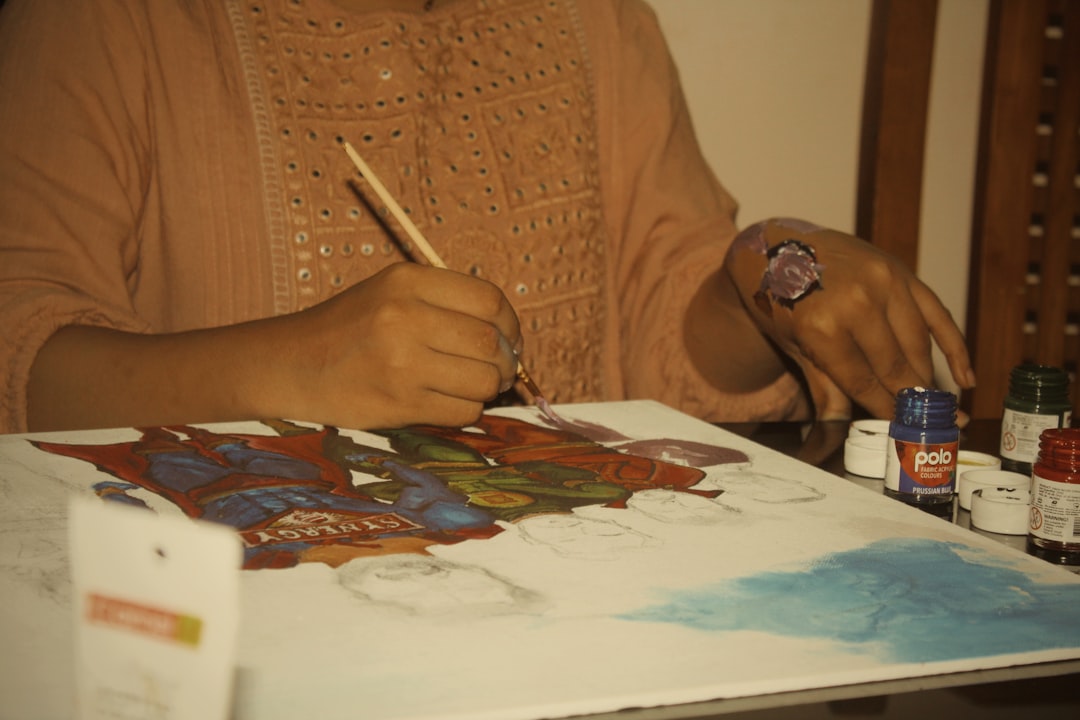
The materials list is short. Thick paper or watercolor paper works best for beginners. You can also try cloth or handmade paper for practice. Acrylics or poster colors are ideal for starters. Fine-tipped brushes or thin bamboo sticks work well for intricate detailing. Black fine-liner pens can help with drawing outlines.
Traditional colors came from natural sources such as soot, turmeric, leaves, flowers, rice paste, and mineral pigments, depending on local practice and availability. Black color is obtained by mixing soot with cow dung; yellow from turmeric or pollen; blue from indigo; red from the kusam flower juice or red sandalwood; green from leaves of the wood apple tree; white from rice powder; orange from palasha flowers.
Many contemporary artists use acrylic or poster colors because they are accessible, bright, and durable. The change of material does not make a work less meaningful. For a beginner, acrylics are a practical and honest choice.
A local perspective on learning the art
Starting Madhubani painting is not about copying a design correctly on your first attempt. The tradition was never taught through formal instruction alone. Women in the Mithila villages of Bihar learned by watching, by sitting beside a mother or aunt, by filling in sections of a larger painting and gradually understanding the grammar of the form. For a new learner today, that same approach still works best. Begin with one motif, a fish or a lotus. Practice the double outline, the first thin line and the slightly thicker outer line. Then fill with flat color. Do not shade. Repeat that same motif 10 times. By the 10th time, your hand knows what your eye is learning. Only then add a second motif. Madhubani rewards patience, not speed. The art has survived because the people who made it understood that rhythm, repetition, and care matter more than perfection.
Craft and folk art teaching perspective, Madhubani district, Bihar
Key motifs and what they mean
Nature symbols are central. Fish may suggest fertility and prosperity; birds can bring companionship and movement; lotuses point toward auspicious beauty; the tree of life shelters many beings. There is ritual content for particular occasions, such as birth or marriage, and festivals including Holi, Surya Shasti, Kali Puja, Upanayana, and Durga Puja.
Every Madhubani painting has a distinct border, often double or triple lines with fish, dots, floral chains, or geometric repeats. Learning 3 or 4 border patterns early is important because they frame everything. Many Madhubani designs are symmetrical. Practice creating mirrored patterns on both sides of your central motif. Repetition of simple patterns like dots, circles, or lines gives the painting a harmonious look.

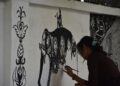

Stick to symbolic themes: folk tales, festivals, and nature motifs. Fill all empty spaces with patterns to maintain the classic Madhubani look. Limit your color palette to 5 or 6 colors to achieve a cohesive design.

Where to learn Madhubani painting in India
The best place to learn is Bihar itself. Jitwarpur, Ranti, and Rasidpur are the 3 most notable villages associated with the tradition and evolution of Madhubani art. Tourism circuits like the Ramayana Circuit are starting to include places for visitors to meet artists, see the studios, and learn how each brushstroke tells a story.
Madhubani painting provides livelihood support to about 20,000 to 25,000 artisan families on a regular basis in Madhubani district and other places of Bihar. Visiting and paying for a workshop directly supports those families. If travel to Bihar is not possible, online courses are widely available. The Indian Institute of Mithila Art and Research describes itself as India’s largest folk art institution and offers online classes that provide an immersive journey into the world of Madhubani painting.
At home, practice basic patterns such as flowers, leaves, and geometric shapes to build confidence and familiarity with the art form. Dedicate at least 30 minutes daily to practicing motifs, and you will soon see progress in your Madhubani journey.

Start your Madhubani painting journey today
Madhubani painting is not a craft you master in a weekend. It is a living tradition with centuries of visual logic behind it, and that is exactly what makes it worth learning. Start with one motif, choose the Bharni style, and practice the double outline on thick paper. Madhubani painting asks only for your attention and your time. UNESCO recognized its importance as an intangible heritage in 2018, yet it remains open to anyone willing to sit down and practice. Pick up a fine-liner pen, draw a fish with two careful outlines, and fill it with flat color. That single shape is where every Madhubani painting begins.
Discover more about Madhubani painting
- Madhubani Painting, Bihar Tourism (Official Government of Bihar)
- Madhubani Paintings: People’s Living Cultural Heritage, World History Encyclopedia
- Madhubani Magic: Exploring Bihar Through Its Folk Art, Travel Heights (2025)